
How Much Does Phlebotomy Training Cost in the UK? A Complete 2026 Price Guide
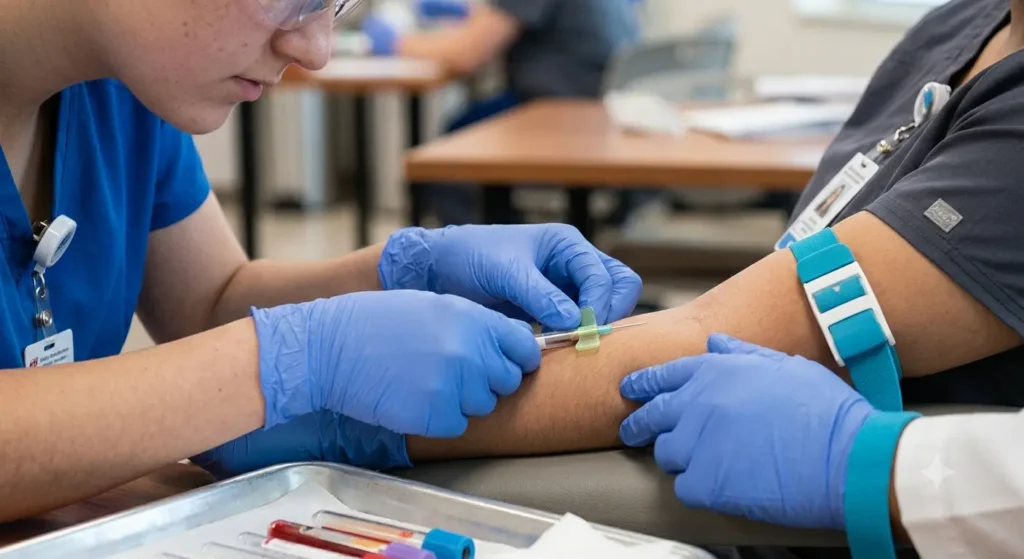
If you’re researching how much phlebotomy training costs in the UK, you’ll notice prices vary considerably between providers. As an example, Medax Group’s 2-day practical Phlebotomy Training course is priced at £299.99 and is delivered at the Medax Training Centre, 166 College Rd, Harrow HA1 1BH, combining classroom learning with supervised practical training. Rather than comparing price alone, it’s important to understand exactly what is included in the course fee and how it prepares you for clinical practice This guide explains average phlebotomy training costs in the UK, what is usually included in course fees, hidden expenses to watch for, NHS funding possibilities, and how to choose training that prepares you confidently for clinical practice. What Is Phlebotomy Training? Phlebotomy is the process of collecting blood samples safely for laboratory testing, blood donation, or medical diagnosis. Although drawing blood may appear straightforward, it requires technical skill, patient communication, infection prevention knowledge, and confidence in clinical settings. Professional phlebotomy training teaches learners how to: Employers across NHS and private healthcare settings generally value candidates who have completed structured practical training rather than theory-only courses. If you’re exploring Phlebotomy Training UK, choosing a programme that combines classroom learning with supervised practical experience provides stronger preparation for clinical practice. Average Phlebotomy Training Costs in the UK For learners looking for practical, beginner-friendly training, Medax Group offers: Course Detail Information Course Phlebotomy Training Duration 2 Days Price £299.99 Location Medax Training Centre, 166 College Rd, Harrow HA1 1BH Learning Format Classroom teaching with hands-on practical training Suitable For Beginners, HCAs, Nursing Students, International Nurses and Career Changers This pricing sits within the expected range for practical, face-to-face phlebotomy training in the UK and reflects the additional value of supervised skills development rather than theory-only learning. What Does the Course Fee Usually Include? For example, Medax’s 2-day Phlebotomy Training includes structured theoretical teaching alongside practical venepuncture training in a clinical learning environment. Learners benefit from trainer demonstrations, supervised practice, clinical equipment, and certification on successful completion, providing a balanced introduction for those beginning a healthcare career. Hidden Costs to Consider The advertised phlebotomy course price is not always the total amount you may spend. Possible additional costs include: Planning ahead helps avoid unexpected expenses during your training journey. Common Mistake Choosing a course based only on its advertised price without checking whether practical sessions, certification, or assessments are included. Why Some Courses Cost More Than Others Higher course fees often reflect additional resources that improve learning quality. Factors influencing pricing include: A course with extensive practical training requires more equipment, trainer supervision, and teaching time, making it naturally more expensive than an online-only programme. Is the Cheapest Course Always the Best Choice? Not necessarily. Lower-cost courses may provide basic theoretical knowledge but limited opportunities to practise venepuncture on training equipment or under professional supervision. Potential drawbacks include: Healthcare employers often value practical competence as much as theoretical understanding. Can the NHS Pay for Phlebotomy Training? In some circumstances, yes. Funding opportunities vary depending on your employment status and local healthcare organisation. Possible options include: Eligibility requirements differ between organisations, so prospective learners should check directly with their employer or local NHS Trust. How to Choose a High-Quality Phlebotomy Course Before enrolling, consider the following checklist. ✔ Practical venepuncture training ✔ Experienced clinical trainers ✔ Small group learning ✔ Modern clinical equipment ✔ Transparent pricing ✔ Recognised certification ✔ Positive learner reviews ✔ Career guidance after training Courses that combine these features generally provide better preparation for healthcare employment than theory-only alternatives. Expert Tip Ask how much supervised practical time is included before booking. Practical experience often has the greatest impact on confidence when performing blood collection in real clinical environments. Is Phlebotomy Training Worth the Investment? For many learners, the answer is yes. Phlebotomy remains an important clinical skill used across hospitals, GP surgeries, community healthcare, diagnostic laboratories, and private clinics. Completing quality training may help learners: Rather than focusing solely on phlebotomy certification cost, consider the long-term value of gaining practical experience that supports your healthcare career. Why Practical Training Matters More Than Price Clinical confidence cannot be developed through theory alone. Practical sessions allow learners to: These supervised experiences help bridge the gap between classroom learning and real clinical practice. Why Choose Medax Group for Phlebotomy Training? When comparing providers, it is important to look beyond the course price and consider the overall learning experience. Medax Group’s 2-day Phlebotomy Training course (£299.99) is designed for beginners and healthcare professionals who want practical, clinically relevant training. Delivered from the Medax Training Centre in Harrow, the course focuses on building confidence through supervised hands-on practice rather than theory alone. Learners benefit from: The emphasis is on developing safe blood collection techniques, effective patient communication, and the confidence needed to apply these skills in NHS and private healthcare settings. Conclusion Understanding how much phlebotomy training costs involves more than comparing course fees. The overall value depends on practical experience, trainer expertise, certification, learner support, and the confidence you gain throughout the programme. While lower-cost courses may seem attractive, investing in quality practical training can provide stronger clinical skills and better preparation for future healthcare roles. If you’re considering a career in phlebotomy, explore Medax Group’s Phlebotomy Training UK programme to learn more about practical training designed to support aspiring healthcare professionals. Frequently Asked Questions 1. What is the average phlebotomy training cost in the UK? Medax Group currently offers its 2-day practical Phlebotomy Training course for £299.99. The course is delivered at the Medax Training Centre in Harrow and combines theoretical learning with supervised practical venepuncture training. Prospective learners should check the course page for the latest availability and any future updates 2. Are online phlebotomy courses cheaper? Yes. Theory-only online courses usually cost less than practical classroom programmes. 3. Do I need healthcare experience before joining? No. Many beginner courses are designed for learners with no previous experience. 4. Is practical training included? Quality providers usually include supervised practical sessions, but always confirm before
How to Become a Nursing Associate in the UK: Complete Career Guide

Becoming a nursing associate is one of the most practical routes into professional healthcare in England. It is a strong option if you are already working as a healthcare assistant, care worker, support worker, or international healthcare professional and want to move into a more skilled clinical role. A nursing associate works between a healthcare assistant and a registered nurse. The role supports registered nurses, delivers hands-on patient care, and helps bridge the gap between care support roles and registered nursing. In England, nursing associates are regulated by the Nursing and Midwifery Council. The NMC nursing associate register opened in January 2019, and nursing associates are regulated in a similar way to nurses and midwives, including registration, revalidation and fitness to practise. If your goal is to build a long-term UK healthcare career, this guide explains how to become a nursing associate, what qualifications you need, how the training works, and what to do if you are an international candidate. You can also explore Medax support for Nursing Associate OSCE Training, Clinical Skills Training, and Apprenticeship Programs. What Is a Nursing Associate? A nursing associate is a regulated healthcare professional who works as part of the nursing team. The role is designed to support registered nurses and improve patient care across different settings, including hospitals, care homes, community care, mental health services and social care environments. A nursing associate may support with: The title “nursing associate” is protected in law in England. This means a person must be registered with the NMC to practise as a nursing associate or use the title. Is a Nursing Associate the Same as a Registered Nurse? No. A nursing associate is not the same as a registered nurse. A nursing associate works under the nursing team structure and supports registered nurses. A registered nurse has wider clinical responsibility, decision-making authority and accountability. However, the nursing associate role can be a good stepping stone if you later want to become a registered nurse. Many candidates use this pathway to gain clinical experience, build confidence, and then progress into registered nursing. Who Is This Career Path Best For? The nursing associate route is suitable for people who want a practical healthcare career with patient contact. It is especially useful for: If you are already working in care and want to improve your clinical confidence, Medax’s Clinical Skills Training can help you build practical healthcare skills before or alongside your career progression. Entry Requirements to Become a Nursing Associate To begin nursing associate training, you usually need GCSEs in English and Maths at grades 9 to 4, previously A to C, or Functional Skills Level 2 in English and Maths. You also need to show that you can study at Level 5 foundation degree level. Typical entry requirements include: Requirement What It Means English and Maths GCSE grade 9–4 / A–C or Functional Skills Level 2 Study ability Ability to study at Level 5 foundation degree level Healthcare values Compassion, professionalism and safe care Work experience Helpful, especially in healthcare or social care Employer support Often needed for apprenticeship route Right to work or study Important for UK-based and international candidates If you do not already have English and Maths qualifications, some employers or education providers may ask you to complete literacy and numeracy assessments before starting. Main Routes to Become a Nursing Associate There are three main routes depending on your background. 1. Nursing Associate Apprenticeship Route This is the most common route. A nursing associate apprenticeship allows you to work while you study. You are usually employed by an NHS trust, care provider, GP practice, private healthcare provider, or social care organisation. Most nursing associate training programmes are currently delivered through the apprenticeship route, and vacancies are commonly advertised through NHS Jobs and healthcare recruitment platforms. The apprenticeship is a Level 5 route and usually combines: The nursing associate apprenticeship standard is available to employers, and apprenticeship levy funding can be used for training fees. The NMC states that nursing associate apprenticeships must be delivered by an NMC-approved Approved Education Institution for pre-registration nursing. 2. Direct Entry Foundation Degree Route Some candidates apply directly to a university or college for a nursing associate foundation degree. This route is usually suitable for people who are not already employed in a healthcare role or who want a more direct study route. Many nursing associate foundation degree programmes are around two years, depending on the provider. The National Careers Service describes the Nursing Associate Level 5 Higher Apprenticeship as taking two years and combining study with on-the-job training. Before applying, always check that the course is NMC-approved. This matters because since 26 July 2019, anyone looking to join the nursing associate register must complete an NMC-approved nursing associate programme. 3. Route for International Candidates If you trained outside England and want to work as a nursing associate in England, you must register with the NMC first. The NMC explains that applicants from outside the UK may need to show eligibility, meet health and character requirements, prove English language ability, complete both parts of the Test of Competence, confirm indemnity arrangements, and attend a face-to-face verification check once in England. For international candidates, the process may include: The NMC Test of Competence has two parts: a computer-based test called the CBT and a practical test called the OSCE. Applicants must take the test specific to the part of the register they want to join, including nursing associate, adult nurse, mental health nurse, children’s nurse, learning disability nurse or midwife. If you are preparing for the practical stage, Medax provides Nursing Associate OSCE Training, OSCE Virtual Nursing Associate Training, OSCE Onsite Nursing Associate Training, and OSCE Comprehensive Nursing Associate Training. Step-by-Step: How to Become a Nursing Associate Here is the simple pathway. Step 1: Understand the Role Before applying, make sure you understand what a nursing associate does. This is a hands-on care role. You need strong communication, compassion, patience, professionalism and the ability to work safely under pressure.
How Much Is the OET Exam in the UK? Full Cost Guide for Nurses

If you are a nurse planning to register in the UK, one of the first questions you may ask is: How much is the OET exam in the UK? The short answer is: the full OET test currently costs AU$587, which is around £310 in the UK, depending on exchange rates and bank charges. The fee is paid when you book through the official OET booking system. Leicester College, an OET test centre in the UK, also lists the test fee as AU$587, approximately £310. But the exam fee is not the only cost you should plan for. You may also need to budget for preparation, travel, mock tests, resits, or course support especially if you are taking OET as part of your UK NMC registration journey. At Medax, many nurses prepare for OET alongside CBT, OSCE and NMC registration planning. This guide explains the real costs clearly so you can avoid surprises. How Much Is the OET Exam Fee in the UK? The official OET fee for the full test is currently: OET Test Option Fee Full OET test — Listening, Reading, Writing and Speaking AU$587 Approximate UK cost Around £310 Payment time At the time of booking Currency note Final GBP amount may change because of exchange rate and card provider fees The full OET test includes all four sub-tests: For nurses applying to the UK NMC, you normally need to complete the OET Nursing version and meet the NMC’s required scores. What OET Score Do Nurses Need for UK NMC Registration? For UK NMC registration, nurses need: OET Sub-Test NMC Requirement Listening Grade B / 350 or above Reading Grade B / 350 or above Speaking Grade B / 350 or above Writing Grade C+ / 300 or above The NMC accepts OET on Paper, OET on Computer and OET@Home. Applicants should choose the Nursing version of the OET test. This matters because many nurses think they need Grade B in all four parts. For UK NMC registration, writing is different: the minimum accepted writing score is currently C+ / 300 or above. Can You Book Only One OET Sub-Test? Yes, OET also provides individual sub-test pricing. According to OET’s support information, the current individual sub-test fees are: Option Fee 1 sub-test AU$315 2 sub-tests AU$415 3 sub-tests AU$515 Full test, 4 sub-tests AU$587 However, nurses should be careful. Even if OET allows individual sub-test booking, your regulator’s score-combining rules matter. The NMC allows scores to be combined across two OET sittings only if the required score conditions are met. Before booking only one sub-test, check whether your previous scores can still be used for NMC registration. What Is Included in the OET Exam Fee? The OET test fee usually covers: Some UK test centres also mention that the OET fee includes access to online preparation materials, practice tests, masterclasses and daily language tips. Still, this does not replace proper preparation. Many nurses need extra support for writing and speaking because these two areas are where candidates often lose marks. Extra Costs Nurses Should Budget For The OET exam fee is only one part of your total budget. Here are the real costs nurses should plan for: Cost Area What to Expect OET exam fee Around £310, depending on exchange rate OET preparation course Depends on course provider and support level Travel to test centre Train, bus, fuel, taxi or hotel if needed Mock tests Useful before booking the real exam Resit cost Needed if you do not achieve the required score Cancellation or change fee May apply if you change plans late NMC pathway costs CBT, OSCE, registration and document costs later A smart budget is not just “Can I pay for the exam?”It is “Can I prepare well enough to avoid paying twice?” How Much Is OET Preparation with Medax? Medax offers OET training for nurses and healthcare professionals with structured teaching, mock exams and personalised feedback. The Medax OET page explains that the course focuses on healthcare-specific content, writing structure, role-play communication, mock tests and flexible online or in-person support. Medax also offers an OET Comprehensive Course listed at £199.99, with a 6-week live online preparation structure, OET booklet, live classes, mock tests, exam booking assistance and tutor support. Suggested internal link:Add link on anchor text OET Comprehensive Course to the Medax OET Comprehensive page. Is OET Expensive Compared to IELTS? OET is usually more expensive than IELTS. But many nurses still choose OET because the test is healthcare-specific. The writing task is usually a healthcare letter, not an academic essay.The speaking task uses healthcare role-play, not general discussion topics.The reading and listening tasks are based on medical and clinical situations. That makes OET easier to relate to for many nurses. However, “easier to relate to” does not mean “easy to pass.” You still need to understand the marking criteria, manage your time, and write or speak in a safe professional way. Suggested internal link:Add link on anchor text OET for Nurses: How to Score B to the previous Medax blog on scoring B in OET. Should You Book OET Before Taking a Preparation Course? If your English is already strong and you understand the OET format, you may be able to book first and prepare independently. But many nurses should prepare before booking, especially if: The safest approach is to take a diagnostic test first. That helps you know whether you are exam-ready or whether you need 4–6 weeks of focused preparation. How Nurses Can Avoid Paying for OET Twice Many candidates lose money because they book the exam too early. To reduce the risk of resit costs, follow this checklist before booking: 1. Take a mock test first Do not guess your level. A mock test shows your real performance. 2. Get writing feedback OET writing is not only about grammar. You must select the right case notes, organise the letter, and write for the correct reader. 3. Practise speaking role-play Speaking is marked on clinical communication. You need empathy, structure,
OET for Nurses: How to Score B and Move Closer to UK NMC Registration

For many international nurses, OET is one of the most important steps toward UK registration. You may already understand English. You may already speak with patients, doctors and colleagues every day. But OET is not only about “knowing English.” It is about using clear, safe and professional English in healthcare situations. That is where many nurses struggle. They study grammar for months, but still lose marks in writing.They speak confidently, but miss the structure needed in role-play.They read medical texts, but run out of time in the reading test.They listen carefully, but miss small details in consultations. This guide explains how nurses can prepare for OET and work toward a Grade B score, especially if your goal is UK NMC registration. For structured support, you can also explore the Medax OET Training Course or the OET Comprehensive Course. What OET Score Do Nurses Need? For UK NMC registration, the Nursing and Midwifery Council currently accepts OET results with at least Grade B / 350+ in reading, listening and speaking, and at least Grade C+ / 300+ in writing. The NMC also accepts OET on Paper, OET on Computer and OET@Home, as long as applicants choose the Nursing version of the test. OET Sub-Test Safe Target NMC Minimum Requirement Listening B / 350+ B / 350+ Reading B / 350+ B / 350+ Speaking B / 350+ B / 350+ Writing Aim for B / 350+ C+ / 300+ Although writing has a lower NMC minimum, many nurses still aim for B in writing because it gives them a stronger safety margin. A Grade B in OET generally starts from a scale score of 350. Why Nurses Fail to Score B in OET Most nurses do not fail OET because they are bad at English. They usually fail because they prepare in the wrong way. Common reasons include: OET rewards safe, professional communication. Your answer must sound like a nurse communicating in a real healthcare setting. How to Score B in OET Listening OET listening tests whether you can understand healthcare conversations, patient consultations and workplace discussions. To score B, you need more than general listening practice. You need to train your ear for clinical details. 1. Practise listening for patient information In Part A, you may hear details such as symptoms, medication, dates, duration, family history or treatment instructions. Do not try to understand every word. Focus on the information that would matter in a clinical note. Example: A patient may say: “It started about three weeks ago, but it’s become worse over the last few days.” The useful clinical detail is: Duration: 3 weeks, worsening over recent days That is the type of information you must capture quickly. 2. Improve spelling of medical terms Even if you understand the audio, spelling mistakes can cost marks. Practise common nursing terms such as: Create your own “mistake list” and revise it daily. 3. Listen for meaning, not only keywords In Parts B and C, the answer is often not the exact word you hear. OET checks if you understand the speaker’s attitude, concern or recommendation. Train yourself to ask: This is how you move from basic listening to B-level listening. How to Score B in OET Reading OET reading is a time-management test as much as an English test. Many nurses know the answer but lose marks because they spend too long on one section. 1. Master Reading Part A speed Reading Part A is about finding information quickly. You should practise scanning for: Do not read every sentence slowly. Your goal is to locate the answer fast. 2. Read the question before the full text For Parts B and C, read the question first. This helps you know what to look for. Ask yourself: When you understand the question type, you avoid wasting time. 3. Be careful with similar answer options OET often gives answer choices that look correct. Usually, only one matches the meaning of the text exactly. Do not choose an answer just because it contains a familiar word. Choose the answer that matches the full meaning. How to Score B in OET Writing Writing is where many nurses lose confidence. The good news is that OET writing is not about writing complicated English. It is about writing a clear, relevant and professional healthcare letter. 1. Understand the purpose before writing Before you write, ask: Why am I writing this letter? Is it a referral?A discharge letter?A transfer letter?A letter to advise a patient?A letter to update another healthcare professional? If you do not understand the purpose, your letter will include the wrong information. 2. Select only relevant case notes One of the biggest OET writing mistakes is copying too much from the case notes. You do not need to include everything. You need to include what the reader needs to know. For example, if you are referring a patient to a physiotherapist, the physiotherapist needs information about mobility, pain, injury, relevant medical history and current limitations. They do not need every unrelated detail from the case notes. 3. Use a simple structure A strong OET nursing letter usually follows this structure: Opening: Why you are writingMain clinical details: Current condition, relevant history, treatment or progressNursing concerns: Risks, needs or ongoing care requirementsRequest: What you want the reader to doClosing: Professional ending Simple structure helps the reader understand the patient’s situation quickly. 4. Keep your language professional but natural Avoid overcomplicated sentences. Instead of: “The aforementioned patient is presently manifesting symptoms consistent with deterioration.” Write: “Mr Patel’s condition has deteriorated over the last two days.” Clear writing is safer than fancy writing. How to Score B in OET Speaking OET speaking is not a general English conversation. It is a clinical role-play. You are assessed on how well you communicate with a patient, relative or carer in a healthcare situation. 1. Start with empathy Patients do not only need information. They need reassurance. Useful phrases include: These phrases show patient-centred communication. 2. Do not memorise full scripts
CBT Exam for Nurses: The Complete 2026 Guide for UK Registration

For thousands of international nurses every year, the CBT exam for nurses is the first real step toward building a successful healthcare career in the UK. But here’s the truth most blogs won’t tell you: Passing the CBT is not the hardest part.Understanding the full journey (CBT → OSCE → NMC registration → UK job) is what determines your success. This guide goes far beyond basics. It gives you: If you’re serious about working in the UK as a nurse, this is the only guide you need. What Is the CBT Exam for Nurses? The Computer-Based Test (CBT) is the first stage of the NMC (Nursing and Midwifery Council) registration process. It assesses your theoretical knowledge of: You must pass the CBT before moving to the OSCE (Objective Structured Clinical Examination). For a deeper breakdown of the full journey, read:start your professional nursing journey in the UK https://medax-group.com/start-your-professional-nursing-journey-in-the-uk/ CBT Exam for Nurses in the UK: Why It Matters The CBT is not just an exam it’s a filter for safe clinical practice in the UK. The NHS expects nurses to: The CBT ensures you understand these expectations before entering the UK system. Real Nurse Journey: From CBT to UK Job Let’s make this real. Aisha (India): Her biggest challenge?Understanding UK-specific guidelines, not clinical knowledge. This is where most candidates struggle. CBT Exam Structure (2026 Updated) The CBT exam consists of two parts: Section Description Questions Part A Numeracy (drug calculations) 15 Part B Clinical questions 85 Total Questions: 100Duration: 3 hours Key Topics Covered CBT Exam for Nurses: Fees and Costs Here’s the honest breakdown: Expense Cost CBT Exam Fee £83 Study Materials £50–£300 Training Course (Optional) £130 Structured programs often improve pass rates significantly:cbt training program https://medax-group.com/cbt/ CBT Exam Validity The CBT result is valid for 2 years. This means: How to Book CBT Exam for Nurses Step-by-step process: Full guide here:step-by-step NMC registration process https://medax-group.com/a-step-by-step-guide-to-nmc-registration-process/ CBT Exam Dates 2025–2026 CBT is available year-round. Unlike OSCE, there are no fixed exam windows. You can: CBT vs OSCE vs OET: Full Comparison Feature CBT OSCE OET Type Theory Practical Language Mode Online In-person (UK) Online/Test center Difficulty Moderate High Moderate Purpose Knowledge check Clinical skills English proficiency Explore OSCE training options:osce training program https://medax-group.com/osce-training-program/ Common Challenges Nurses Face in CBT 1. UK Guidelines Confusion Even experienced nurses struggle with: 2. Overconfidence Many candidates underestimate the exam because it’s “theory-based.” Result: failure on first attempt. 3. Lack of Structured Preparation Random YouTube videos are not enough. You need: Comprehensive preparation:cbt comprehensive training https://medax-group.com/cbt-comprehensive/ How to Pass CBT Exam for Nurses (Proven Strategy) 1. Focus on UK Guidelines (Not Just Knowledge) Study: 2. Practice Daily Questions Minimum: 3. Master Numeracy Section Common topics: 4. Use Structured Training Many successful candidates use guided programs because: Advanced Insight: What Most Blogs Miss Passing CBT is only Step 1. The real challenge is: Transitioning to OSCE and UK practice This includes: Learn what comes next:after CBT OSCE guide https://medax-group.com/after-cbt-guide-nmc-osce-2025/ OSCE: The Next Big Step After CBT OSCE is significantly harder than CBT. It tests: OSCE Structure Why OSCE Training Matters Self-study is rarely enough. Structured programs provide: Example:osce time management guide https://medax-group.com/osce-time-management-guide/ Online vs Onsite Training: What’s Better? Feature Online Onsite Flexibility High Low Cost Lower Higher Practical Exposure Limited High Success Rate Moderate High Explore both options: Time & Effort Required Stage Time Required CBT Preparation 4–8 weeks OSCE Preparation 4–12 weeks Full Registration 6–12 months Common Mistakes to Avoid Career Opportunities After Passing CBT Once you pass CBT and OSCE: You can work as a: Explore your career path:your nursing career in the UK https://medax-group.com/your-nursing-career-in-the-uk/ Why Structured Training Improves Success Rate Top-performing candidates often: Explore healthcare training programs:healthcare training programs https://medax-group.com/healthcare-training-programs/ FAQs: CBT Exam for Nurses 1. What is the CBT exam for nurses? It is a computer-based test required for NMC registration, assessing theoretical nursing knowledge. 2. How much is the CBT exam for nurses? The exam costs approximately £83, excluding preparation expenses. 3. How long is CBT valid? The CBT result is valid for 2 years. 4. Is CBT difficult to pass? It is moderately difficult, especially if you are unfamiliar with UK guidelines. 5. Can I take CBT from my home country? Yes, CBT can be taken at authorized test centers worldwide. 6. What happens after passing CBT? You move to OSCE preparation and complete your NMC registration process. 7. How many attempts are allowed? You typically get 3 attempts before needing to restart the process. Final Thoughts: Your First Step Toward the UK The CBT exam for nurses is more than an exam it’s your gateway to a global nursing career. But success depends on: Thousands of nurses fail not because they lack knowledge—but because they lack direction. If you’re serious about working in the UK, start with the right foundation. Take the first step today:https://medax-group.com/register-now/
How Long Does It Take to Become a Phlebotomist?
If you are asking how long does it take to become a phlebotomist, the practical answer is: you can complete basic phlebotomy training in as little as 1–2 days, but becoming confident, competent, and job-ready usually takes several weeks to 3 months, depending on the course, supervised blood-draw experience, employer requirements, and whether you are new to healthcare. In the UK, phlebotomy is not usually a long “school” pathway like nursing. Many people enter through a short training course, a trainee phlebotomist role, healthcare assistant experience, or an apprenticeship route. The National Careers Service states that people can enter phlebotomy through college, apprenticeships, work-based progression, or direct application, and there are no fixed entry requirements for trainee phlebotomist roles, although healthcare qualifications and GCSEs can help. For international nurses, healthcare assistants, nursing students, and UK healthcare aspirants, phlebotomy can be a useful clinical skill. It may strengthen your confidence in patient interaction, infection prevention, sample handling, and NHS-style documentation. But it is important to be clear: phlebotomy training does not replace NMC registration, CBT, OSCE, or OET/IELTS requirements for becoming a registered nurse in the UK. This guide explains the realistic timelines, training routes, costs, common mistakes, and how phlebotomy fits into broader UK healthcare and nursing career pathways. Quick Answer: How Long Does It Take to Become a Phlebotomist? Most learners can complete the classroom or theory element of phlebotomy training quickly. However, safe practice depends on supervised clinical experience, not just a certificate. Pathway Typical Time Best For What You Usually Get Introductory phlebotomy course 1–2 days Beginners exploring healthcare Theory, simulation, basic practical exposure Short course with supervised live blood draws 2 days to 4 weeks Job-ready beginners Certificate of attendance or competency, depending on provider Competency-based programme 8–12 weeks Learners needing stronger clinical practice Supervised venepuncture, assessment, competency sign-off NHS trainee phlebotomist role Varies by employer People applying directly to NHS jobs On-the-job training and supervised practice Healthcare assistant to phlebotomist route 1–6 months HCAs upgrading their role Employer-led training plus ward or clinic experience A public NHS phlebotomy training course, for example, states that its course lasts two days, with theory, dummy-arm practice, and supervised patient bleeding, while a competency-based course from Synnovis describes up to 90 clinical practice hours completed within a 12-week period. So, when people search how long does it take to be a phlebotomist, the honest answer is: Training can be short, but competence takes supervised practice. What Does a Phlebotomist Actually Do? A phlebotomist collects blood samples from patients and sends them for testing. This sounds simple, but the role carries clinical responsibility. A phlebotomist may: The National Careers Service describes phlebotomists as professionals who collect blood samples for analysis and testing, with typical duties including explaining procedures, inserting a needle into a vein, applying dressings, labelling samples, and completing records. This is why good training must go beyond “how to insert a needle.” A safe phlebotomist understands patient dignity, infection control, documentation, escalation, and clinical governance. For learners who want broader practical healthcare preparation, Medax’s clinical skills training can support development of hands-on clinical confidence: https://medax-group.com/clinical-skills-training/ How Long Is Phlebotomy School? In the UK, the phrase “phlebotomy school” can be misleading. Unlike nursing, medicine, or midwifery, phlebotomy does not normally require years of university study. Most UK phlebotomy training is delivered through: The NHS careers guidance says there are no specific entry requirements for phlebotomy, although GCSEs or equivalent qualifications may help, and trainee phlebotomists usually receive training on the job. That means phlebotomy school can be as short as a weekend course, but your ability to work independently depends on whether your employer accepts your training and whether you have enough supervised experience. Certificate of Attendance vs Certificate of Competence This is one of the biggest things most blogs fail to explain. A certificate of attendance means you attended the course. It does not always prove that you can safely take blood from real patients. A certificate of competence usually means you have been assessed against a practical standard. This may include supervised blood draws, documentation checks, infection control practice, and trainer sign-off. When choosing a course, ask: A fast course is not automatically a bad course. But a fast course without supervised practice is usually not enough for real clinical confidence. How Long Does Phlebotomy Certification Take? Phlebotomy certification can take from 1–2 days to around 12 weeks, depending on the provider and the level of supervised practice. Here is the realistic breakdown: Certification Type Time Needed Strength Limitation Attendance certificate 1 day Fast introduction May not prove live-patient competence Theory + simulation certificate 1–2 days Useful for beginners Limited real-patient exposure Supervised practical certificate 2 days to 4 weeks Better for job applications Availability depends on live-patient sessions Competency-based certificate 8–12 weeks Strongest for clinical confidence Takes longer and may cost more A two-day course may be enough to start applying for entry-level phlebotomy or trainee posts if it includes supervised practice and is accepted by employers. A longer competency programme may suit learners who are nervous, new to healthcare, or planning to work in a busy clinical environment. The safest way to think about this is: Certification is not the final goal. Competence is the goal. Can You Become a Phlebotomist With No Healthcare Experience? Yes, many beginners can train in phlebotomy without previous healthcare experience. However, healthcare experience helps. If you have never worked with patients before, you may need more time to become comfortable with: A beginner may complete the course in 2 days but still need several weeks of practice before feeling job-ready. If you already work as a healthcare assistant, support worker, nursing student, laboratory assistant, or overseas nurse, you may progress faster because you already understand patient communication, confidentiality, basic anatomy, and clinical routines. For healthcare assistants who want to expand into broader care skills, Medax’s healthcare training programmes may be a useful next step: https://medax-group.com/healthcare-training-programs/ Step-by-Step: How to Become a Phlebotomist in the UK Step 1: Understand the
Become a Nurse in UK from Philippines (2026 Guide)

Becoming a nurse in the UK from the Philippines is not just a career move it’s a complete life transition. It involves adapting to a new healthcare system, meeting strict regulatory standards, and proving your competence through internationally recognized exams. Many Filipino nurses start this journey with excitement, but along the way, they encounter challenges that most basic guides fail to explain exam failures, financial pressure, confusion around the NMC process, and difficulty adjusting to UK clinical expectations. This guide is designed to go deeper. It combines practical experience, expert insights, and real-world strategies to help you succeed not just start. Free Guidance for Filipino Nurses Need Help Planning Your UK Nursing Pathway? Get expert guidance on OET, CBT, NMC registration, OSCE preparation, and the right training route for your current stage. Ideal if you are preparing from the Philippines and want a clear step-by-step plan. Book My Consultation WhatsApp Medax Why the UK is a Top Destination for Filipino Nurses The UK continues to actively recruit international nurses, especially from the Philippines, due to workforce shortages and the strong clinical foundation Filipino nurses bring. However, the real advantage is not just employment it’s long-term career stability. Many nurses move to the UK for: At the same time, it’s important to be realistic. The journey requires consistent effort, financial planning, and emotional resilience. Complete Step-by-Step Process to Work as a Nurse in the UK Understanding the entire process from start to finish is essential. Many candidates fail because they focus only on exams without understanding how each step connects. Here is a simplified pathway: For a structured overview of this journey, you can explore: Start your professional nursing journey in the UK Step 1: Meet Eligibility Requirements Before beginning, you must meet the basic criteria required by the UK’s Nursing and Midwifery Council (NMC) You should have: While experience is not always mandatory, it plays a critical role in your success especially during OSCE preparation. Nurses with hands-on clinical exposure often perform better in patient scenarios and decision-making tasks. Step 2: Pass the English Language Test (OET or IELTS) English proficiency is a non-negotiable requirement. You must demonstrate your ability to communicate clearly in clinical settings. Most Filipino nurses choose OET because it is designed specifically for healthcare professionals. Common challenges candidates face: Many candidates underestimate this stage and end up retaking the exam multiple times, which increases both cost and delay. To improve your chances, structured programs like: OET Training OET Comprehensive Course provide targeted preparation and exam-focused strategies. Step 3: Pass the CBT Exam The CBT (Computer-Based Test) assesses your theoretical nursing knowledge and understanding of UK healthcare standards. It is not just about what you know it’s about how you apply knowledge in patient-centered scenarios. Topics typically covered include: Many candidates make the mistake of relying on memorization. The CBT is designed to test clinical judgment, not just recall. Proper preparation through structured learning can significantly improve outcomes. You can explore:<a href=”https://medax-group.com/cbt/”>CBT Training</a> or<a href=”https://medax-group.com/cbt-comprehensive/”>CBT Comprehensive Course</a> Step 4: NMC Registration Process The NMC (Nursing and Midwifery Council) is the regulatory authority that evaluates your eligibility to practice in the UK. The process includes: This stage can feel slow and confusing, especially when documentation delays occur. For a complete breakdown, refer to: Step-by-step NMC registration process Step 5: Secure a Job Offer in the UK After passing the CBT and progressing with your NMC application, you can start applying for nursing jobs in the UK through NHS Trusts, private hospitals, or recruitment agencies. It’s important to understand that not all employers offer the same level of support some may include OSCE training, accommodation, and relocation packages, while others provide minimal assistance. Carefully reviewing your job contract before accepting an offer is essential to avoid unexpected costs and ensure you receive the support you need. Step 6: Relocate and Start Working in the UK After securing your job and visa, you will travel to the UK and begin working usually as a Band 4 nurse until you pass the OSCE. This phase is often underestimated. Common struggles include: This is where strong preparation and support systems make a significant difference. Step 7: Pass the OSCE Exam (Final Stage) The OSCE is the most critical step in your journey. It determines whether you become a fully registered nurse in the UK. Unlike CBT, this exam tests your practical skills, communication, and clinical judgment in real-time scenarios. Understanding OSCE in Depth The OSCE (Objective Structured Clinical Examination) is a practical test conducted in a simulated clinical environment. You will rotate through multiple stations, each designed to assess a specific competency. Key areas assessed: Many Filipino nurses struggle not because they lack knowledge but because they are unfamiliar with UK standards and expectations. Comparison of CBT, OET, and OSCE Exam Purpose Difficulty Level Common Challenge OET/IELTS English proficiency Moderate Writing & listening CBT Theory knowledge Moderate Clinical application OSCE Practical skills High Time pressure & communication Choosing the Right OSCE Training Your success in OSCE heavily depends on how you prepare. There are multiple approaches: Many successful candidates choose structured training like:<a href=”https://medax-group.com/osce-training-program/”>OSCE Training Program</a>or explore options here:<a href=”https://medax-group.com/osce/”>OSCE Courses</a> For those pursuing adult nursing:<a href=”https://medax-group.com/osce-comprehensive-adult-nursing/”>Comprehensive Adult Nursing OSCE</a> Proven Strategies to Pass OSCE Success in OSCE is not about luck it’s about preparation and consistency. Key strategies include: You can improve your performance further by studying: OSCE Time Management Guide and 10 Practical OSCE Tips Cost Breakdown for Filipino Nurses Understanding the financial commitment is essential before starting. Stage Estimated Cost (GBP) English Test £150–£250 CBT Exam £83 NMC Application £140 OSCE Exam £794 Training Programs £300–£2000 Key insight: The biggest hidden cost is retakes. Failing exams significantly increases total expenses and delays your timeline. Need a Clear Cost & Exam Plan? Know Your Next Step Before You Start Spending Medax can help you understand your OET, CBT, NMC, and OSCE pathway based on your current stage. Get Free Guidance WhatsApp Us Timeline: How Long Does It Take? On
Become a Nurse in the UK from India: The Complete 2026 Roadmap

If you’re an Indian nurse planning to work in the UK, the path runs through one regulator the Nursing and Midwifery Council (NMC) and two exams: the CBT, which you sit in India, and the OSCE, which you sit after you arrive in the UK. Add an English test, a job offer, and a visa, and the realistic total cost for NMC registration alone is £1,170, before training, travel, or visa fees. Most candidates take between 9 and 18 months from their first English test to their first UK shift. This guide walks through each stage in order, with the current 2026 fees, eligibility rules, and the mistakes that most often slow candidates down. How the Process Works, Step by Step Confirm your eligibility (nursing qualification + active registration in India) Pass an English test OET or IELTS Academic Pass the NMC Computer-Based Test (CBT) Submit your NMC application and pay the evaluation fee Secure a UK nursing job offer and Certificate of Sponsorship Apply for your Health and Care Worker visa Travel to the UK and pass the OSCE Receive your NMC PIN and start work as a registered nurse Each step is explained below. Am I Eligible? What the NMC Actually Checks Before you spend money on tests, confirm the basics. The NMC needs to see: A nursing qualification recognised as broadly equivalent to a UK diploma or degree most BSc Nursing and GNM qualifications from recognised Indian institutions qualify, though the NMC assesses each application individually An active registration with your State Nursing Council or the Indian Nursing Council, with no lapses Evidence of recent practice if you’ve been out of clinical work for an extended period, the NMC may ask for more information A clean health and character record, supported by a police clearance certificate None of this is optional, and gaps here (an expired licence, a name mismatch between your passport and your nursing certificate) are one of the most common causes of delay. Sort out your documentation before you book any exam. Step 1: Pass an English Language Test You can use either OET (Occupational English Test) or IELTS Academic. The scores you need are: Test Reading Listening Speaking Writing IELTS Academic 7.0 7.0 7.0 6.5 OET Grade B Grade B Grade B Grade C+ A common mistake in older guides is listing OET’s writing requirement as Grade B the NMC lowered this to C+ some time ago, and it’s worth double-checking whichever source you’re reading. You can also combine scores from two sittings within 12 months if you narrowly miss the mark in one domain, or use a shortened combining calculator on the NMC’s own site to check. Most Indian nurses find OET easier to prepare for because the material is healthcare-specific rather than general academic English, which matters if you haven’t used English in an academic context recently. If you want structured practice before sitting either exam, our OET preparation programme covers all four modules with live classes and mock tests. Step 2: Pass the NMC Computer-Based Test (CBT) The CBT is the first of the NMC’s two-part Test of Competence, and it’s entirely multiple-choice, taken in India at a Pearson VUE centre. CBT part Timing Questions Focus Part A: Numeracy 30 minutes 15 Drug calculations, dosages Part B: Clinical 2 hours 30 minutes 100 UK-specific clinical knowledge The fee for both parts is £83. You get three attempts within a 12-month window, and you only need to resit the part you failed — a Part B resit costs £70, a Part A resit £50. The most common reason nurses fail Part B isn’t a lack of clinical knowledge, but relying on clinical practices from India rather than NHS-specific guidelines, particularly around medication administration and patient safety protocols. If your CBT prep hasn’t covered UK-specific standards in detail, it’s worth using a course built around them — see our CBT training programme for a structured option. Step 3: Submit Your NMC Application and Pay the Evaluation Fee Once you’ve passed your English test and CBT, you create an NMC online account and submit your qualification and identity documents for verification. This stage carries a non-refundable evaluation fee of £140. The NMC contacts your nursing school and your State Nursing Council directly to confirm your credentials, which typically takes several weeks — start this stage early rather than waiting until everything else is finished, since document verification is often the slowest part of the whole process. For a closer look at what documents you’ll need and how the verification stage actually runs, our NMC registration process guide breaks down each requirement in more depth. Step 4: Secure a UK Nursing Job Offer With your CBT passed and your NMC application progressing, you can start applying to NHS trusts and private healthcare employers. A genuine job offer usually comes with a Certificate of Sponsorship (CoS), which you’ll need for your visa application. Not every employer offers the same level of relocation support — some cover flights, accommodation, and visa costs; others don’t — so read your offer letter carefully before accepting. Step 5: Apply for Your Health and Care Worker Visa As of April 2026, the Health and Care Worker visa application fee is £324 for a visa of up to three years, or £628 for longer. This route is exempt from the Immigration Health Surcharge, which is a significant saving compared with the standard Skilled Worker visa normally over £1,000 per year. Standard processing outside the UK is around three weeks once you’ve submitted biometrics. You’ll need your CoS, proof of your English test, and your job offer details to apply. Processing usually runs in parallel with the final stages of your NMC application, so the two rarely bottleneck each other if you plan ahead. Step 6: Travel to the UK and Prepare for OSCE Once your visa is approved, you’ll travel to the UK often with flights and initial accommodation arranged by your employer, though this varies by sponsor. From here,
How to Become a Phlebotomist in the UK (2026 Complete Guide)
Phlebotomy is one of the most practical ways to start a clinical career in the UK. A phlebotomist is a trained healthcare professional who collects blood samples, usually from a vein in the arm, so that doctors and laboratories can diagnose and monitor conditions such as diabetes, anaemia and infection. Because blood tests sit behind so much of modern healthcare, phlebotomists are needed across the NHS and private sector, from busy hospital wards to quiet GP surgeries.Demand for trained phlebotomists has grown steadily as diagnostic testing volumes increase and as NHS trusts and private labs look for staff who can be trained quickly and deployed into patient-facing roles. This makes phlebotomy an appealing option for several types of reader: complete career changers who want a fast, realistic route into healthcare; healthcare assistants who want to add a valuable clinical skill; and internationally trained nurses who want UK clinical exposure while they work through the NMC registration process.This guide explains, honestly and in plain English, how to become a phlebotomist in the UK what the role involves, whether you need formal qualifications, the realistic step-by-step path, how long it takes, what you can expect to earn, and where professional training fits in. You will also find a UK-specific FAQ section, comparison tables, and a checklist you can use before booking any course. Quick answer: To become a phlebotomist in the UK, most people complete a short, hands-on phlebotomy course covering venepuncture theory, infection control and supervised practical technique, then apply for entry-level phlebotomist, trainee phlebotomist or healthcare assistant roles in the NHS or private healthcare. No degree, and no fixed set of GCSEs, is legally required, although a recognised certificate and supervised practical experience are what most employers actually look for. Key Takeaways Phlebotomy has no mandatory university-level entry requirement in the UK. Employers generally want a recognised training certificate plus supervised, hands-on practice not just classroom theory. Basic training can take as little as one to two days; feeling genuinely job-ready usually takes longer. Phlebotomy is a common first step for healthcare assistants, career changers and internationally trained nurses building UK clinical experience. Phlebotomy training does not replace NMC registration, CBT or OSCE for nurses who want to work as registered nurses in the UK. What Does a Phlebotomist Do? A phlebotomist’s core job is blood collection but the role is broader than “inserting a needle.” Day to day, a phlebotomist typically: Confirms patient identity and checks the request form before any procedure Explains the procedure clearly and gains the patient’s consent Selects the correct equipment, needles and blood collection tubes Performs venepuncture (drawing blood from a vein) safely and accurately Follows infection prevention and control procedures at every step Labels and handles samples correctly for the laboratory Reassures anxious, needle-phobic or unwell patients Recognises and responds appropriately to fainting, difficult veins or complications Keeps accurate records in line with clinical governance standards Typical Workplaces Phlebotomists are employed across almost every part of UK healthcare, including: Hospitals outpatient phlebotomy clinics, wards and pathology departments GP surgeries routine blood tests for local patients Private clinics including diagnostic and aesthetic clinics Diagnostic laboratories sample collection linked directly to lab services Community healthcare including domiciliary and mobile phlebotomy services Can Anyone Become a Phlebotomist in the UK? Yes phlebotomy is genuinely one of the more accessible entry points into UK healthcare, and this is one of the reasons it appeals to such a wide range of people. No mandatory university degree. Unlike nursing or medicine, phlebotomy does not require a degree-level qualification. There is also no single nationally mandated academic entry requirement. Healthcare experience helps, but is not compulsory. If you already work in healthcare, you will likely pick up patient communication and infection control practice faster, but complete beginners are regularly accepted onto training courses. Career changers from non-clinical backgrounds frequently use phlebotomy as their first step into healthcare work, since training is short and practical. International nurses preparing for NMC registration sometimes use phlebotomy training to build UK-style clinical confidence, infection control habits and patient communication skills alongside their CBT and OSCE preparation. Healthcare assistants (HCAs) commonly add phlebotomy as an extra skill to make themselves more valuable to employers and to access a wider range of roles. Well suited to phlebotomy if you: Are comfortable working closely with patients Have steady hands and good attention to detail Want a fast, practical route into healthcare Are already working towards a wider healthcare career May want to explore other routes if you: Are uncomfortable around needles or blood Want a purely desk-based healthcare role Are specifically seeking a registered nursing role only (phlebotomy is not a substitute for NMC registration) Step-by-Step Guide to Becoming a Phlebotomist There is no single legally mandated pathway into phlebotomy in the UK, but the steps below reflect the route most successful candidates follow. Step 1 Understand the Role Before you spend any money on training, make sure you understand what the job actually involves day to day: patient contact, needles, infection control, and working to a strict procedure. If you’re unsure, some healthcare assistant experience or shadowing can help you decide before committing to a course. Step 2 Learn the Required Skills Good phlebotomists combine a technical skill (venepuncture) with soft skills: clear communication, patience, and the ability to put anxious patients at ease. A structured course will build both. Step 3 Gain Practical Training Choose a course that goes beyond theory slides. Look for structured teaching on vein and arm anatomy, infection prevention, PPE, sharps safety, patient identification and consent the full safety framework around the practical skill, not just the needle technique itself. Step 4 Practise Venepuncture Hands-on practice, typically on training arms under close tutor supervision, is where technique is actually built. This includes correct use of vacutainers, butterfly needles and other phlebotomy equipment, patient positioning, and sample labelling and handling. Step 5 Prepare Your CV Highlight your certificate, any healthcare experience (paid or voluntary), and transferable skills such as
How to Get Into Mental Health Nursing (Complete UK Career Guide)

Mental health nursing is one of the most rewarding and in-demand healthcare careers today. With rising awareness of mental health conditions globally, the need for skilled, compassionate professionals has never been greater. If you’re searching for how to get into mental health nursing, especially in the UK, this guide will walk you through every step from education and training to licensing, exams, and securing a job. Whether you’re an international nurse, a healthcare assistant, or a student exploring your future, this article gives you a realistic, step-by-step roadmap to success. What Is Mental Health Nursing? Mental health nursing focuses on supporting individuals experiencing conditions such as: Unlike general nursing, this specialty emphasizes communication, therapeutic relationships, and psychological care rather than just physical treatment. Mental health nurses work in: Why Choose Mental Health Nursing? Choosing mental health nursing isn’t just a career decision it’s a commitment to making a real difference. Key Benefits Real-World Insight Many international nurses from Pakistan, India, and Africa transition into mental health nursing because: However, success requires proper training, exam preparation, and understanding of UK healthcare standards. Step-by-Step: How to Get Into Mental Health Nursing Step 1: Choose the Right Educational Pathway There are multiple routes into mental health nursing depending on your background. Option 1: BSc Mental Health Nursing A bsc mental health nursing or bsc hons mental health nursing is the most common route for beginners. Option 2: MSc / Masters in Mental Health Nursing If you already have a healthcare-related degree, you can pursue: These programs are typically: Option 3: Mental Health Nursing Apprenticeship For those already working in healthcare: These allow you to: Explore apprenticeship pathways here:mental health nursing apprenticeship https://medax-group.com/apprenticeship/ Step 2: Understand the NMC Registration Process To work as a nurse in the UK, you must register with the Nursing and Midwifery Council (NMC). The process includes: For a detailed breakdown:nmc registration process https://medax-group.com/a-step-by-step-guide-to-nmc-registration-process/ CBT, OET, and OSCE Explained (Critical for International Nurses) Many candidates underestimate these exams and this is where most failures occur. Overview Table Exam Purpose Format Difficulty CBT Theory test Multiple choice Moderate OET English proficiency Reading, writing, speaking Moderate OSCE Practical skills Clinical stations High CBT (Computer-Based Test) The CBT tests your theoretical nursing knowledge. Start preparation here:cbt training https://medax-group.com/cbt/ For full preparation:cbt comprehensive https://medax-group.com/cbt-comprehensive/ OET (Occupational English Test) Required for non-native English speakers. Prepare effectively:oet training https://medax-group.com/oet/ Advanced prep:oet comprehensive https://medax-group.com/oet-comprehensive/ OSCE (Objective Structured Clinical Examination) This is the most challenging step. It tests: You’ll rotate through multiple stations under strict timing. Learn more about OSCE:osce training program https://medax-group.com/osce-training-program/ OSCE Structure: What Most Candidates Don’t Know The OSCE exam typically includes: Timing Breakdown Station Type Time APIE 20 minutes Skills 10–15 minutes Documentation 10 minutes Time management is critical:osce time management guide https://medax-group.com/osce-time-management-guide/ Why Many International Nurses Fail OSCE Based on real-world experience, common issues include: This is why structured training matters. For mental health specialization:mental health osce training https://medax-group.com/osce-virtual-mental-health/ Or onsite support:onsite mental health osce https://medax-group.com/osce-onsite-mental-health/ Comprehensive program:comprehensive mental health osce https://medax-group.com/osce-comprehensive-mental-health/ Clinical Skills Training: The Missing Link Many candidates rely only on theory which is a mistake. Practical skills training helps you: Explore hands-on training:clinical skills training https://medax-group.com/clinical-skills-training/ Cost and Time Breakdown Estimated Timeline Stage Duration English test 1–2 months CBT prep 1–2 months OSCE prep 1–3 months Total 3–6 months Approximate Costs Item Cost Range OET/IELTS £300–£400 CBT £83 OSCE £794 Training programs Varies Note: Costs vary based on training quality and location. Mental Health Nursing Jobs in the UK After registration, you can apply for: Typical responsibilities: Career guidance:nursing career in the uk https://medax-group.com/your-nursing-career-in-the-uk/ Mental Health Nursing Salary in the UK Salary depends on experience and banding: Level Salary Entry (Band 5) £28,000–£34,000 Mid-level £35,000–£42,000 Senior £43,000+ Additional benefits: Common Mistakes to Avoid Underestimating OSCE This is the biggest reason candidates fail. Choosing Cheap, Low-Quality Training Poor training leads to repeated exam attempts — costing more in the long run. Ignoring Communication Skills Mental health nursing heavily depends on patient interaction. Lack of Structured Preparation Random studying is ineffective. Structured preparation programs improve success rates significantly. Online vs Onsite Training: Which Is Better? Factor Online Onsite Flexibility High Low Practical exposure Limited High Cost Lower Higher Success rate Moderate High Best approach: combine both. Real Career Journey Example A nurse from Pakistan typically follows this path: Common challenges: Support programs can make this journey smoother:start nursing journey https://medax-group.com/start-your-professional-nursing-journey-in-the-uk/ Advanced Insight: What Most Blogs Don’t Tell You Preparation strategies:osce tips https://medax-group.com/10-practical-tips-on-how-to-pass-your-osce-exam/ Choosing the Right Training Provider When selecting a training provider, consider: Explore available programs:healthcare training programs https://medax-group.com/healthcare-training-programs/ Frequently Asked Questions (FAQs) How long does it take to become a mental health nurse in the UK? For international nurses, it typically takes 3–6 months after meeting eligibility requirements. Is mental health nursing a good career? Yes. It offers job stability, career growth, and strong demand in the UK healthcare system. Can I become a mental health nurse without a degree? No. You must complete a recognized nursing degree or apprenticeship. Which exam is hardest: CBT or OSCE? OSCE is significantly harder because it tests practical skills under time pressure. What is the fastest route for international nurses? The fastest route is: Do I need UK experience before OSCE? No, but proper training is essential to understand UK standards. Can I work while preparing for OSCE? Yes, many candidates work as healthcare assistants while preparing. Conclusion Getting into mental health nursing is a structured but achievable journey especially if you understand the process and prepare strategically. From choosing the right degree to passing the OSCE, every step requires focus, preparation, and the right guidance. The difference between success and repeated failure often comes down to training quality and preparation strategy. If you’re serious about starting your UK nursing career, take the next step here:register now https://medax-group.com/register-now/