
NEWS 2 Chart: Complete Guide for Nurses and OSCE Preparation
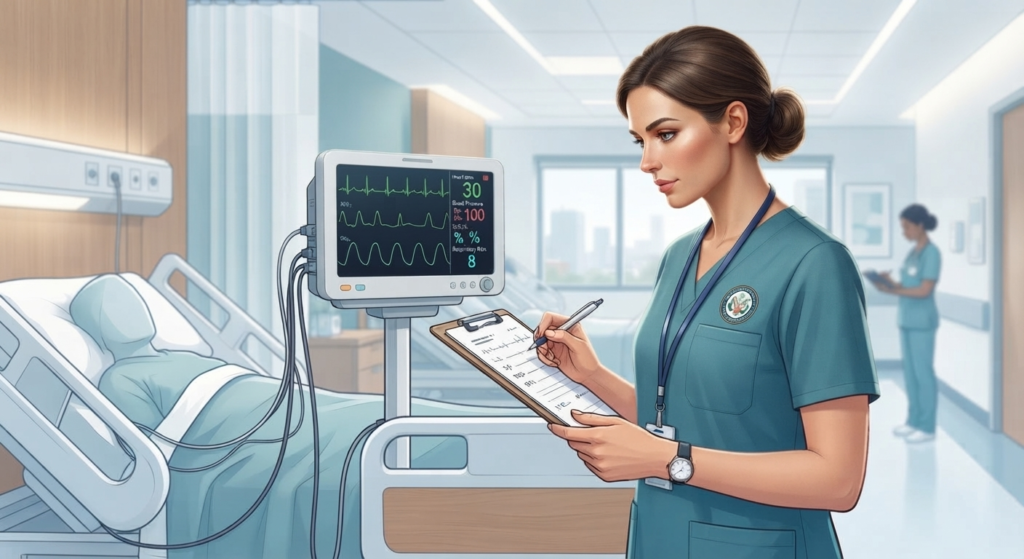
The NEWS 2 chart is the standard observation chart used across the NHS to record a patient’s vital signs and turn them into a single early warning score. NEWS2 stands for National Early Warning Score 2, and the chart was developed by the Royal College of Physicians (RCP) to help staff spot acute illness and deterioration early and respond in a consistent way. If you are a nurse, an international nurse joining the NHS, or a candidate preparing for the NMC OSCE, you will need to read this chart accurately. This guide explains what is recorded, how the score is built, what Scale 2 is, how monitoring and escalation relate to the score, and where the official chart lives. It also explains how NEWS2 appears in NMC OSCE materials. Educational use only. This guide is written by Medax OSCE Academy for learning. It does not replace the official RCP chart, your employer’s policy or clinical judgement. Medax is not affiliated with, endorsed by or approved by the NHS, NHS England, the NMC or the Royal College of Physicians. What Is a NEWS2 Chart? A NEWS2 chart is a colour-coded observation chart. Staff record routine physiological measurements on it, score each one, and add the scores together. The total helps the team judge how unwell the patient may be and how urgently to respond. The RCP describes NEWS as a simple aggregate scoring system built on measurements that are already routinely taken. NHS England and NHS Improvement endorsed it as the recommended early warning system for adults in the NHS in England. The RCP report also notes it should support, not replace, clinical judgement. In short: the chart tracks trends over time, flags deterioration early and gives everyone a common language. What Does NEWS2 Stand For? NEWS2 stands for National Early Warning Score 2. The “2” marks the updated version published in 2017, which refined the original NEWS launched in 2012. The main changes were: a separate oxygen saturation scoring scale (Scale 2) for patients with confirmed hypercapnic respiratory failure; “new confusion” added to the consciousness assessment, changing AVPU to ACVPU; reordering of parameters to follow the ABCDE approach; a clearer emphasis on the link between a score of 5 or more and possible sepsis; a redesigned colour scheme that works better for people with red–green colour blindness. What Is Recorded on a NEWS2 Chart? Six physiological parameters are scored, plus a weighting for supplemental oxygen. The chart also records the oxygen delivery device (for example a Venturi mask) and flow rate. Parameter What is recorded Notes Respiration rate Breaths per minute Scored high or low Oxygen saturation (SpO₂) Percentage, using Scale 1 or Scale 2 Scale choice is a clinical decision (see below) Air or oxygen Whether the patient is on supplemental oxygen Adds 2 points if on oxygen Systolic blood pressure mmHg Only systolic is scored Pulse rate Beats per minute Scored high or low Consciousness ACVPU: Alert, new Confusion, Voice, Pain, Unresponsive Anything other than Alert scores 3 Temperature °C Both high and low temperatures score The RCP says the core scoring section of the chart should stay consistent nationally, while the rest of the chart may be adapted locally (for example, to record pain or urine output). How Does NEWS2 Scoring Work? Each parameter scores between 0 and 3. The further a reading is from the normal range, the higher the score. The six parameter scores are added, and 2 points are added if the patient needs supplemental oxygen to maintain their prescribed saturation. The total is the aggregate NEWS2 score. The table below summarises the RCP Scale 1 scoring. Always check readings against the official RCP chart; this table is a learning summary. Parameter 3 2 1 0 1 2 3 Respiration rate ≤8 9–11 12–20 21–24 ≥25 SpO₂ Scale 1 (%) ≤91 92–93 94–95 ≥96 Air or oxygen Air Oxygen Systolic BP (mmHg) ≤90 91–100 101–110 111–219 ≥220 Pulse (bpm) ≤40 41–50 51–90 91–110 111–130 ≥131 Consciousness Alert C, V, P or U Temperature (°C) ≤35.0 35.1–36.0 36.1–38.0 38.1–39.0 ≥39.1 Two points people often miss: A single red score. A score of 3 in any one parameter is treated as a trigger for urgent review, even if the total is low. New confusion scores 3. If it is unclear whether confusion is new, the RCP says to treat it as new until confirmed otherwise. Some patients have naturally low blood pressure or a low resting pulse, for example, and the RCP notes that other information can explain unusual values. That is why the score is an aid to assessment, not a verdict. What Is NEWS2 Scale 2 and When May Scale 2 Be Used? Scale 2 is a separate oxygen saturation scoring scale on the NEWS2 chart. It is for patients who have confirmed hypercapnic respiratory failure (often type 2 respiratory failure, most commonly related to COPD) and whose prescribed target saturation is 88–92%. Why it exists: patients with hypercapnic respiratory failure can be harmed if given too much oxygen. Under Scale 1, a target of 88–92% would score as abnormal and could push staff to give more oxygen than is safe. Scale 2 adjusts scoring so that 88–92% scores 0. The RCP’s rules for using it: Use it only for patients confirmed to have hypercapnic respiratory failure on blood gas analysis, in a previous or current admission. A competent clinical decision maker must choose it, and the decision must be recorded in the clinical notes. In all other cases, use Scale 1. The difference between SpO2 Scale 1 and Scale 2 is the range that scores 0: 96% or above on Scale 1, and 88–92% on Scale 2. The scale you are not using should be clearly crossed out on the chart. Practical point: Scale 2 is not something to switch to because a patient has COPD or a low reading. If you are unsure which scale applies, ask a senior clinician and follow local policy. NEWS2 Monitoring Frequency The RCP recommends that
Tracheostomy Care Training for Care Staff: Full Guide
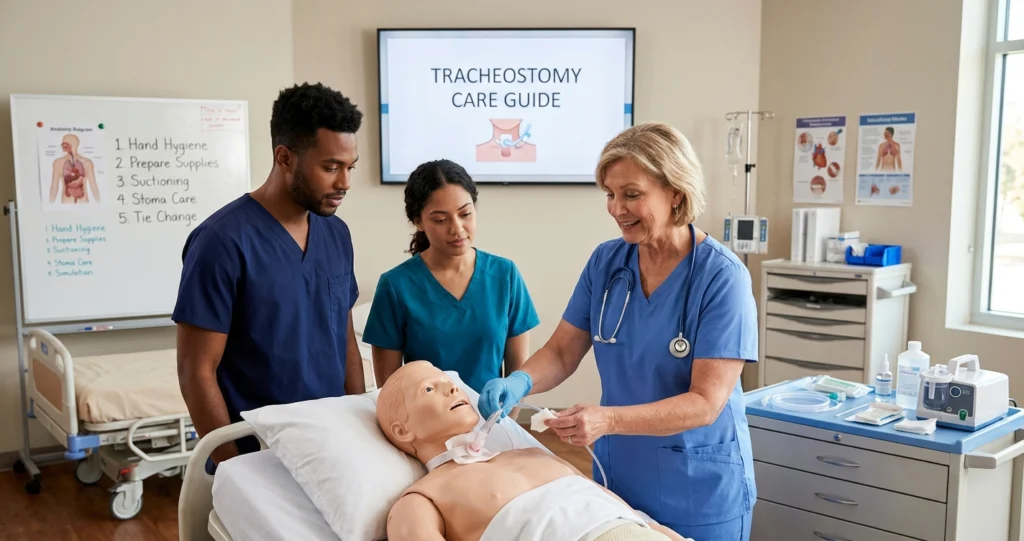
A tracheostomy is one of the highest-risk pieces of equipment a care worker will ever be responsible for. Get it wrong a blocked tube, a missed sign of infection, a fumbled emergency response and the consequences can be immediate and severe. Tracheostomy care training for care staff exists precisely because this isn’t a skill that can be safely learned from a leaflet or a single classroom session. This guide sets out what genuine tracheostomy care training should cover, who needs it, how competency should actually be assessed, and the mistakes that most commonly put both service users and providers at risk. What Does Tracheostomy Care Actually Involve? A tracheostomy is a surgically created opening in the neck into the windpipe (trachea), usually with a tube in place to keep the airway open. People living with a tracheostomy in a community or supported living setting typically need support with: Stoma site care cleaning around the opening and checking for signs of infection or skin breakdown Tube changes (where the care worker is trained and signed off to assist or perform this) Suctioning to clear secretions and keep the airway clear Humidification and management of secretions, particularly important since a tracheostomy bypasses the nose’s natural warming and moistening function Cuff management, where a cuffed tube is in place Recognising and responding to emergencies a blocked tube, accidental decannulation (the tube coming out), or bleeding Some individuals also require ventilator support alongside their tracheostomy, which adds a further layer of clinical complexity and typically demands training beyond general tracheostomy care alone. Why This Isn’t a Skill to Learn “On the Job” Informally A blocked or displaced tracheostomy tube can compromise someone’s airway within minutes. This is not an area where care staff should be learning through trial and error, gradually picking things up from colleagues, or relying on a single training session completed months or years earlier without refreshment. CQC’s fundamental standards require staff to have the skills, knowledge, and experience necessary for the care they deliver. For tracheostomy care specifically, inspectors expect to see individualised, hands-on competency assessment not just a certificate confirming someone attended a session. A worker who can describe the suctioning procedure in an interview but has never been observed performing it safely under supervision has not been adequately trained, regardless of what their file says. Core Components of Tracheostomy Care Training 1. Understanding the Anatomy and Purpose Staff need a working understanding of why the person has a tracheostomy, what type of tube they have, and what “normal” looks like for that specific individual because tube types, cuff status, and care routines vary significantly between people. 2. Suctioning Technique Safe suctioning depth, duration, technique, and recognising when suctioning is and isn’t appropriate delivered through supervised, hands-on <a href=”https://medax-group.com/clinical-skills-training/”>clinical skills training</a> using appropriate equipment and simulation before any real-world practice. 3. Stoma Site Care and Infection Prevention Cleaning technique, dressing changes where relevant, and recognising early signs of infection, skin breakdown, or granulation tissue that need escalation to a clinician. 4. Humidification and Secretion Management Understanding why humidification matters, how to use the equipment involved (heat and moisture exchangers, nebulisers where prescribed), and recognising when secretions indicate a problem rather than normal variation. 5. Emergency Response This is the single most critical component. Staff need rehearsed, not just described, responses to: A blocked tube (recognising the signs and knowing the clearance protocol) Accidental decannulation (the tube coming out) and safe re-insertion where the worker is trained and authorised to do this, or immediate escalation where they are not Bleeding from the stoma site Signs of respiratory distress 6. Tube Changes Not every care worker will be trained or authorised to change a tracheostomy tube this varies by provider policy, the individual’s care plan, and local clinical governance arrangements. Where care staff are involved, this requires the most intensive level of supervised practice and sign-off of any component. Who on Your Team Needs This Training? Role Typical Training Scope Support Worker / Healthcare Assistant Stoma care, suctioning, humidification, recognising and escalating emergencies Senior Support Worker All of the above, plus supervision of others and incident escalation Registered Nurse (clinical oversight) Full competency including tube changes where applicable, assessment of others, liaison with ENT/respiratory specialists Bank/Agency staff Same individualised competency standard as permanent staff before deployment A frequent and serious gap: bank or agency staff being deployed to support someone with a tracheostomy without their own competency being individually verified for that specific person’s equipment and care plan, on the assumption that agency-provided training is equivalent. It often isn’t, and this is exactly the kind of gap that surfaces during a serious incident review. Online vs Onsite Training: What Actually Works Factor Online / Virtual Onsite / In-Person Best for Anatomy, theory, infection control principles, documentation standards Suctioning technique, emergency drills, stoma care, tube change practice Assessment rigour Knowledge checks only Direct observation and physical competency sign-off Risk if used alone for practical skills High cannot verify physical technique or reaction speed under pressure Low assessor confirms safe, timely technique Suitability for emergency response training Poor on its own Essential emergency scenarios need to be physically rehearsed, not just read about Theory can be delivered flexibly online. Suctioning technique, emergency decannulation response, and tube changes cannot be safely verified without in-person, supervised practice. Any provider offering “complete” tracheostomy training through e-learning alone is not offering a genuinely safe standard for this particular skill area. A blended model flexible theory plus mandatory in-person assessment reflects how Medax structures its <a href=”https://medax-group.com/complex-care-training/”>complex care training</a>. Common Mistakes in Tracheostomy Care Training Treating attendance as competency. Sitting through a session on suctioning is not the same as being observed safely performing it under time pressure. No individualised sign-off per service user. A worker competent with one person’s tube type and routine isn’t automatically ready for a different individual with different equipment or a different baseline. Infrequent emergency drills. Blocked tube and decannulation emergencies are, thankfully, rare for any given individual which means the skill
How Much Does Phlebotomy Training Cost in the UK? A Complete 2026 Price Guide

If you’re researching how much phlebotomy training costs in the UK, or comparing phlebotomy certification cost and course pricing before you book, you’ll notice prices vary considerably between providers. As an example, Medax Group’s 2-day practical Phlebotomy Training course is priced at £299.99 and is delivered at the Medax Training Centre, 166 College Rd, Harrow HA1 1BH, combining classroom learning with supervised practical training. Rather than comparing price alone, it’s important to understand exactly what is included in the course fee and how it prepares you for clinical practice This guide explains average phlebotomy training costs in the UK, what is usually included in course fees, hidden expenses to watch for, NHS funding possibilities, and how to choose training that prepares you confidently for clinical practice. What Is Phlebotomy Training? Phlebotomy is the process of collecting blood samples safely for laboratory testing, blood donation, or medical diagnosis. Although drawing blood may appear straightforward, it requires technical skill, patient communication, infection prevention knowledge, and confidence in clinical settings. Professional phlebotomy training teaches learners how to: Employers across NHS and private healthcare settings generally value candidates who have completed structured practical training rather than theory-only courses. If you’re exploring Phlebotomy Training UK, choosing a programme that combines classroom learning with supervised practical experience provides stronger preparation for clinical practice. Average Phlebotomy Training and Certification Costs in the UK For learners looking for practical, beginner-friendly training, Medax Group offers: Course Detail Information Course Phlebotomy Training Duration 2 Days Price £299.99 Location Medax Training Centre, 166 College Rd, Harrow HA1 1BH Learning Format Classroom teaching with hands-on practical training Suitable For Beginners, HCAs, Nursing Students, International Nurses and Career Changers This pricing sits within the expected range for practical, face-to-face phlebotomy training in the UK and reflects the additional value of supervised skills development rather than theory-only learning. What Do Phlebotomy Course Fees Usually Include? For example, Medax’s 2-day Phlebotomy Training includes structured theoretical teaching alongside practical venepuncture training in a clinical learning environment. Learners benefit from trainer demonstrations, supervised practice, clinical equipment, and certification on successful completion, providing a balanced introduction for those beginning a healthcare career. Hidden Costs to Consider The advertised phlebotomy course price is not always the total amount you may spend. Possible additional costs include: Planning ahead helps avoid unexpected expenses during your training journey. Before you pay, ask the provider for a written quote that confirms the phlebotomy certification pricing, what is included and any extra charges. Common Mistake Choosing a course based only on its advertised price without checking whether practical sessions, certification, or assessments are included. Why Some Courses Cost More Than Others Higher course fees often reflect additional resources that improve learning quality. Factors influencing pricing include: A course with extensive practical training requires more equipment, trainer supervision, and teaching time, making it naturally more expensive than an online-only programme. Is a Cheap Phlebotomy Certification Always the Best Choice? Not necessarily. Lower-cost courses may provide basic theoretical knowledge but limited opportunities to practise venepuncture on training equipment or under professional supervision. Potential drawbacks include: Healthcare employers often value practical competence as much as theoretical understanding. Can the NHS Pay for Phlebotomy Training? In some circumstances, yes. Funding opportunities vary depending on your employment status and local healthcare organisation. Possible options include: Eligibility requirements differ between organisations, so prospective learners should check directly with their employer or local NHS Trust. How to Choose a High-Quality Phlebotomy Course Before enrolling, consider the following checklist. ✔ Practical venepuncture training ✔ Experienced clinical trainers ✔ Small group learning ✔ Modern clinical equipment ✔ Transparent pricing ✔ Recognised certification ✔ Positive learner reviews ✔ Career guidance after training Courses that combine these features generally provide better preparation for healthcare employment than theory-only alternatives. Expert Tip Ask how much supervised practical time is included before booking. Practical experience often has the greatest impact on confidence when performing blood collection in real clinical environments. Is Phlebotomy Training Worth the Investment? For many learners, the answer is yes. Phlebotomy remains an important clinical skill used across hospitals, GP surgeries, community healthcare, diagnostic laboratories, and private clinics. Completing quality training may help learners: Rather than focusing solely on phlebotomy certification cost, consider the long-term value of gaining practical experience that supports your healthcare career. Why Practical Training Matters More Than Price Clinical confidence cannot be developed through theory alone. Practical sessions allow learners to: These supervised experiences help bridge the gap between classroom learning and real clinical practice. Why Choose Medax Group for Phlebotomy Training? When comparing providers, it is important to look beyond the course price and consider the overall learning experience. Medax Group’s 2-day Phlebotomy Training course (£299.99) is designed for beginners and healthcare professionals who want practical, clinically relevant training. Delivered from the Medax Training Centre in Harrow, the course focuses on building confidence through supervised hands-on practice rather than theory alone. Learners benefit from: The emphasis is on developing safe blood collection techniques, effective patient communication, and the confidence needed to apply these skills in NHS and private healthcare settings. Conclusion Understanding how much phlebotomy training costs involves more than comparing course fees. The overall value depends on practical experience, trainer expertise, certification, learner support, and the confidence you gain throughout the programme. While lower-cost courses may seem attractive, investing in quality practical training can provide stronger clinical skills and better preparation for future healthcare roles. If you’re considering a career in phlebotomy, explore Medax Group’s Phlebotomy Training UK programme to learn more about practical training designed to support aspiring healthcare professionals. Phlebotomy Course Cost: Frequently Asked Questions 1. How much does a phlebotomy course cost in the UK? Medax Group currently offers its 2-day practical Phlebotomy Training course for £299.99. The course is delivered at the Medax Training Centre in Harrow and combines theoretical learning with supervised practical venepuncture training. Prospective learners should check the course page for the latest availability and any future updates 2. Are online phlebotomy courses cheaper? Yes. Theory-only online courses usually cost less
How Long Does It Take to Become a Phlebotomist?

If you are asking how long does it take to become a phlebotomist, the practical answer is: you can complete basic phlebotomy training in as little as 1–2 days, but becoming confident, competent, and job-ready usually takes several weeks to 3 months, depending on the course, supervised blood-draw experience, employer requirements, and whether you are new to healthcare. In the UK, phlebotomy is not usually a long “school” pathway like nursing. Many people enter through a short training course, a trainee phlebotomist role, healthcare assistant experience, or an apprenticeship route. The National Careers Service states that people can enter phlebotomy through college, apprenticeships, work-based progression, or direct application, and there are no fixed entry requirements for trainee phlebotomist roles, although healthcare qualifications and GCSEs can help. For international nurses, healthcare assistants, nursing students, and UK healthcare aspirants, phlebotomy can be a useful clinical skill. It may strengthen your confidence in patient interaction, infection prevention, sample handling, and NHS-style documentation. But it is important to be clear: phlebotomy training does not replace NMC registration, CBT, OSCE, or OET/IELTS requirements for becoming a registered nurse in the UK. This guide explains the realistic timelines, training routes, costs, common mistakes, and how phlebotomy fits into broader UK healthcare and nursing career pathways. Quick Answer: How Long Does It Take to Become a Phlebotomist? Most learners can complete the classroom or theory element of phlebotomy training quickly. However, safe practice depends on supervised clinical experience, not just a certificate. Pathway Typical Time Best For What You Usually Get Introductory phlebotomy course 1–2 days Beginners exploring healthcare Theory, simulation, basic practical exposure Short course with supervised live blood draws 2 days to 4 weeks Job-ready beginners Certificate of attendance or competency, depending on provider Competency-based programme 8–12 weeks Learners needing stronger clinical practice Supervised venepuncture, assessment, competency sign-off NHS trainee phlebotomist role Varies by employer People applying directly to NHS jobs On-the-job training and supervised practice Healthcare assistant to phlebotomist route 1–6 months HCAs upgrading their role Employer-led training plus ward or clinic experience A public NHS phlebotomy training course, for example, states that its course lasts two days, with theory, dummy-arm practice, and supervised patient bleeding, while a competency-based course from Synnovis describes up to 90 clinical practice hours completed within a 12-week period. So, when people search how long does it take to be a phlebotomist, the honest answer is: Training can be short, but competence takes supervised practice. What Does a Phlebotomist Actually Do? A phlebotomist collects blood samples from patients and sends them for testing. This sounds simple, but the role carries clinical responsibility. A phlebotomist may: The National Careers Service describes phlebotomists as professionals who collect blood samples for analysis and testing, with typical duties including explaining procedures, inserting a needle into a vein, applying dressings, labelling samples, and completing records. This is why good training must go beyond “how to insert a needle.” A safe phlebotomist understands patient dignity, infection control, documentation, escalation, and clinical governance. For learners who want broader practical healthcare preparation, Medax’s clinical skills training can support development of hands-on clinical confidence: https://medax-group.com/clinical-skills-training/ How Long Is Phlebotomy School or a Phlebotomy Course? In the UK, the phrase “phlebotomy school” can be misleading. Unlike nursing, medicine, or midwifery, phlebotomy does not normally require years of university study. Most UK phlebotomy training is delivered through: The NHS careers guidance says there are no specific entry requirements for phlebotomy, although GCSEs or equivalent qualifications may help, and trainee phlebotomists usually receive training on the job. That means phlebotomy school (including phlebotomy classes or a phlebotomy program) can be as short as a weekend course, but your ability to work independently depends on whether your employer accepts your training and whether you have enough supervised experience. Certificate of Attendance vs Certificate of Competence This is one of the biggest things most blogs fail to explain. A certificate of attendance means you attended the course. It does not always prove that you can safely take blood from real patients. A certificate of competence usually means you have been assessed against a practical standard. This may include supervised blood draws, documentation checks, infection control practice, and trainer sign-off. When choosing a course, ask: A fast course is not automatically a bad course. But a fast course without supervised practice is usually not enough for real clinical confidence. How Long Does Phlebotomy Certification Take? Phlebotomy certification can take from 1–2 days to around 12 weeks, depending on the provider and the level of supervised practice. Medax’s 2-day phlebotomy training course in Harrow is an example of the short, practical route. Here is the realistic breakdown: Certification Type Time Needed Strength Limitation Attendance certificate 1 day Fast introduction May not prove live-patient competence Theory + simulation certificate 1–2 days Useful for beginners Limited real-patient exposure Supervised practical certificate 2 days to 4 weeks Better for job applications Availability depends on live-patient sessions Competency-based certificate 8–12 weeks Strongest for clinical confidence Takes longer and may cost more A two-day course may be enough to start applying for entry-level phlebotomy or trainee posts if it includes supervised practice and is accepted by employers. A longer competency programme may suit learners who are nervous, new to healthcare, or planning to work in a busy clinical environment. The safest way to think about this is: Certification is not the final goal. Competence is the goal. Can You Become a Phlebotomist With No Healthcare Experience? Yes, many beginners can train in phlebotomy without previous healthcare experience. However, healthcare experience helps. If you have never worked with patients before, you may need more time to become comfortable with: A beginner may complete the course in 2 days but still need several weeks of practice before feeling job-ready. If you already work as a healthcare assistant, support worker, nursing student, laboratory assistant, or overseas nurse, you may progress faster because you already understand patient communication, confidentiality, basic anatomy, and clinical routines. For healthcare assistants who want to expand into broader
How to Become a Phlebotomist in the UK (2026 Complete Guide)
Phlebotomy is one of the most practical ways to start a clinical career in the UK. A phlebotomist is a trained healthcare professional who collects blood samples, usually from a vein in the arm, so that doctors and laboratories can diagnose and monitor conditions such as diabetes, anaemia and infection. Because blood tests sit behind so much of modern healthcare, phlebotomists are needed across the NHS and private sector, from busy hospital wards to quiet GP surgeries.Demand for trained phlebotomists has grown steadily as diagnostic testing volumes increase and as NHS trusts and private labs look for staff who can be trained quickly and deployed into patient-facing roles. This makes phlebotomy an appealing option for several types of reader: complete career changers who want a fast, realistic route into healthcare; healthcare assistants who want to add a valuable clinical skill; and internationally trained nurses who want UK clinical exposure while they work through the NMC registration process.This guide explains, honestly and in plain English, how to become a phlebotomist in the UK what the role involves, whether you need formal qualifications, the realistic step-by-step path, how long it takes, what you can expect to earn, and where professional training fits in. You will also find a UK-specific FAQ section, comparison tables, and a checklist you can use before booking any course. Quick answer: To become a phlebotomist in the UK, most people complete a short, hands-on phlebotomy course covering venepuncture theory, infection control and supervised practical technique, then apply for entry-level phlebotomist, trainee phlebotomist or healthcare assistant roles in the NHS or private healthcare. No degree, and no fixed set of GCSEs, is legally required, although a recognised certificate and supervised practical experience are what most employers actually look for. Key Takeaways Phlebotomy has no mandatory university-level entry requirement in the UK. Employers generally want a recognised training certificate plus supervised, hands-on practice not just classroom theory. Basic training can take as little as one to two days; feeling genuinely job-ready usually takes longer (see how long it takes to become a phlebotomist). Phlebotomy is a common first step for healthcare assistants, career changers and internationally trained nurses building UK clinical experience. Phlebotomy training does not replace NMC registration, CBT or OSCE for nurses who want to work as registered nurses in the UK. What Does a Phlebotomist Do? A phlebotomist’s core job is blood collection but the role is broader than “inserting a needle.” Day to day, a phlebotomist typically: Confirms patient identity and checks the request form before any procedure Explains the procedure clearly and gains the patient’s consent Selects the correct equipment, needles and blood collection tubes Performs venepuncture (drawing blood from a vein) safely and accurately Follows infection prevention and control procedures at every step Labels and handles samples correctly for the laboratory Reassures anxious, needle-phobic or unwell patients Recognises and responds appropriately to fainting, difficult veins or complications Keeps accurate records in line with clinical governance standards Typical Workplaces Phlebotomists are employed across almost every part of UK healthcare, including: Hospitals outpatient phlebotomy clinics, wards and pathology departments GP surgeries routine blood tests for local patients Private clinics including diagnostic and aesthetic clinics Diagnostic laboratories sample collection linked directly to lab services Community healthcare including domiciliary and mobile phlebotomy services Can Anyone Become a Phlebotomist in the UK? Yes phlebotomy is genuinely one of the more accessible entry points into UK healthcare, and this is one of the reasons it appeals to such a wide range of people. No mandatory university degree. So, do you need a degree to be a phlebotomist? No. Unlike nursing or medicine, phlebotomy does not require a degree-level qualification, and you do not need to be a nurse first. There is also no single nationally mandated academic entry requirement. Healthcare experience helps, but is not compulsory. If you already work in healthcare, you will likely pick up patient communication and infection control practice faster, but complete beginners are regularly accepted onto training courses. Career changers from non-clinical backgrounds frequently use phlebotomy as their first step into healthcare work, since training is short and practical. International nurses preparing for NMC registration sometimes use phlebotomy training to build UK-style clinical confidence, infection control habits and patient communication skills alongside their CBT and OSCE preparation. Healthcare assistants (HCAs) commonly add phlebotomy as an extra skill to make themselves more valuable to employers and to access a wider range of roles. Well suited to phlebotomy if you: Are comfortable working closely with patients Have steady hands and good attention to detail Want a fast, practical route into healthcare Are already working towards a wider healthcare career May want to explore other routes if you: Are uncomfortable around needles or blood Want a purely desk-based healthcare role Are specifically seeking a registered nursing role only (phlebotomy is not a substitute for NMC registration) Step-by-Step Guide to Becoming a Phlebotomist There is no single legally mandated pathway into phlebotomy in the UK, but the steps below reflect the route most successful candidates follow. Step 1 Understand the Role Before you spend any money on training (see our guide to phlebotomy course costs), make sure you understand what the job actually involves day to day: patient contact, needles, infection control, and working to a strict procedure. If you’re unsure, some healthcare assistant experience or shadowing can help you decide before committing to a course. Step 2 Learn the Required Skills Good phlebotomists combine a technical skill (venepuncture) with soft skills: clear communication, patience, and the ability to put anxious patients at ease. A structured course will build both. Step 3 Gain Practical Training Choose a course that goes beyond theory slides. Look for structured teaching on vein and arm anatomy, infection prevention, PPE, sharps safety, patient identification and consent the full safety framework around the practical skill, not just the needle technique itself. Step 4 Practise Venepuncture Hands-on practice, typically on training arms under close tutor supervision, is where technique is actually built. This
How to Apply for an Apprenticeship (Complete Guide for Healthcare Careers)

Starting a healthcare career in the UK can feel overwhelming especially for international nurses and healthcare assistants trying to understand where to begin. One of the most practical and cost-effective pathways is learning how to apply for an apprenticeship a route that combines paid work, structured training, and long-term career growth. Unlike traditional study routes, apprenticeships allow you to earn while you learn, gain real clinical experience, and build a direct pathway into the UK healthcare system. This guide breaks down everything you need to know from application timelines to step-by-step processes, real challenges, and how apprenticeships connect to advanced pathways like CBT, OSCE, and NMC registration. What Is an Apprenticeship in Healthcare? A healthcare apprenticeship is a structured program where you: For international candidates, this is often the first step toward becoming a registered nurse in the UK. If you’re exploring structured programs, the healthcare apprenticeship pathway offered through Medax provides a strong foundation aligned with UK clinical standards. Why Apprenticeships Are Popular Among International Candidates Many nurses from Pakistan, India, Nepal, and African countries choose apprenticeships because: Real-World Insight Many candidates start as healthcare assistants through apprenticeship-style roles, then progress: Healthcare Assistant → CBT → OSCE → NMC Registration → Registered Nurse This pathway is explained in detail in the guide on starting your professional nursing journey in the UK, which aligns closely with real career transitions. When Do Apprenticeship Applications Open? One of the most searched questions is: “When do apprenticeship applications open?” There is no single fixed date. Applications usually open: Intake Period Typical Timeline January Intake October – December April Intake January – March September Intake May – August However, healthcare apprenticeships can open year-round, depending on employer demand. Key Tip: Apply 3–6 months in advance to increase your chances. When Do You Apply for Apprenticeships? Timing is critical. You should apply when: For healthcare candidates, aligning your application with CBT and OET preparation gives you a major advantage. Step-by-Step: How to Apply for an Apprenticeship Here’s a clear, practical breakdown of the process: Identify the Right Apprenticeship Not all apprenticeships are equal. Focus on: Choose programs that align with your long-term goal of becoming a registered nurse. Prepare Your Documents You’ll need: Common Mistake: Many candidates submit generic CVs.UK employers expect role-specific, skills-focused CVs. Apply Through Trusted Platforms Applications can be made via: For guided pathways, many candidates explore healthcare training programs that combine job readiness with clinical training. Pass the Interview Expect questions on: Real Challenge: International candidates often struggle with scenario-based questions, not technical knowledge. Receive Offer & Start Training Once selected, you will: How Apprenticeships Connect to UK Nursing Registration This is where most blogs fail they don’t explain the full journey. Apprenticeships are often the entry point, not the final goal. To become a registered nurse in the UK, you must complete: Stage Requirement 1 English Test (OET/IELTS) 2 CBT Exam 3 NMC Application 4 OSCE Exam 5 Registration You can explore the full NMC process in the step-by-step guide to NMC registration process. Understanding CBT, OET, and OSCE (Critical for Progression) CBT (Computer-Based Test) Preparation is essential, and many candidates enroll in structured CBT courses for better success rates. OET (Occupational English Test) Compared to IELTS, OET is more relevant for nurses. OSCE (Objective Structured Clinical Examination) This is the most challenging stage. It includes: OSCE Structure Overview Component Details Stations 10–12 Duration ~15 minutes each Focus Practical skills + communication Assessment Strict marking criteria Choosing the right OSCE training program can significantly impact your success rate, especially when transitioning from theory to real clinical practice. Online vs Onsite Training: What Works Better? This is a major decision point. Factor Online Training Onsite Training Flexibility High Low Practical Exposure Limited High Cost Lower Higher Success Rate Moderate Higher Real Insight: Most successful candidates combine: Cost Breakdown: What to Expect Transparency matters. Here’s a realistic cost overview: Stage Estimated Cost English Test £300–£500 CBT £83 OSCE £794 Training Programs £500–£3000 Important: No legitimate provider guarantees jobs.Be cautious of unrealistic promises. Timeframe: How Long Does It Take? Stage Duration Apprenticeship Entry 1–3 months CBT Preparation 1–2 months OSCE Preparation 1–3 months Full Registration 6–12 months Common Mistakes When Applying for Apprenticeships 1. Applying Without a Career Plan Many candidates apply blindly without understanding progression. 2. Ignoring English Preparation Poor communication skills are a major rejection factor. 3. Underestimating OSCE This is where most candidates fail. 4. Choosing Cheap, Low-Quality Training This leads to repeated exam attempts and higher costs. Advanced Insight: What Most Candidates Don’t Know Learning frameworks like OSCE time management strategies can significantly improve outcomes. Career Outcomes After Apprenticeship Once you progress through training and registration, you can become: You can also explore long-term career planning through structured nursing career pathways in the UK. Why Structured Training Matters Many international candidates fail not due to lack of knowledge—but lack of structure. A well-designed program provides: Clinical skills training plays a crucial role in bridging the gap between theory and real-world practice. Soft Transition Toward Enrollment If you’re serious about building a healthcare career in the UK: Many candidates prefer structured programs that combine CBT, OET, and OSCE preparation under one system, reducing confusion and increasing success rates. Frequently Asked Questions (FAQs) How to apply for an apprenticeship in the UK? You need to identify a suitable role, prepare your CV, apply through official platforms, and pass an interview. Healthcare candidates should align applications with CBT and OET preparation. When do apprenticeship applications open? Applications typically open throughout the year, with major intakes in January, April, and September. Can international candidates apply for apprenticeships? Yes, but eligibility depends on visa requirements and employer sponsorship. Many start through healthcare assistant roles. Do apprenticeships lead to nursing jobs? Not directly, but they provide a strong pathway toward CBT, OSCE, and NMC registration. What is the hardest part of the process? Most candidates struggle with the OSCE due to its practical and time-based nature. How long does it take to become a
Childcare Apprenticeship Training UK | Medax Group

Childcare apprenticeship training is one of the most practical, cost-effective, and career-focused pathways for individuals especially international candidates looking to enter or grow within the UK healthcare and care sector. For international nurses, healthcare assistants, and aspiring caregivers from countries like India, Pakistan, Nepal, and across Africa, this pathway offers more than just education it provides hands-on experience, structured learning, and a direct route into UK employment. But here’s the reality most websites won’t tell you: Apprenticeship training alone is NOT enough to secure long-term healthcare career growth in the UK.You must strategically align it with clinical skills, NMC registration, OSCE preparation, and professional certifications. This guide will walk you through everything step-by-step with real-world insights, expert advice, and a clear roadmap to success. What Is Childcare Apprenticeship Training? Childcare apprenticeship training is a structured program where you: It combines: Component Description Practical Work Hands-on experience in childcare settings Classroom Learning Theory, safeguarding, development Assessment Ongoing evaluation of skills Certification Recognized UK qualification In simple terms: “You learn by doing, not just studying.” What Is the Meaning of Apprenticeship Training? Apprenticeship training refers to a government-supported vocational learning system where individuals gain skills through employment combined with formal education. It is especially valuable in healthcare because: For healthcare aspirants, this becomes a foundation step toward advanced roles like: Why Childcare Apprenticeship Training Matters for Healthcare Careers Many international candidates make a critical mistake: They focus only on theory exams like CBT or OETThey ignore hands-on UK care experience This creates a gap. Real Example (Common Scenario) A nurse from Pakistan clears CBT but struggles in OSCE because: This is where apprenticeship training helps bridge the gap. Types of Apprenticeship Training in the UK 1. Childcare Apprenticeships 2. Healthcare Apprenticeships What Is Pre-Apprenticeship Training? Pre-apprenticeship training prepares you before entering a formal apprenticeship. It includes: This stage is crucial for international candidates who are not familiar with UK healthcare systems. Who Pays for Apprenticeship Training? This is one of the most searched questions. Short Answer: Usually funded by the UK government and employers. Breakdown: Stakeholder Contribution Government Covers majority of training cost Employer Pays salary + partial training Apprentice Minimal or no direct cost However: Additional costs may include: Who Runs Apprenticeship Training? Apprenticeship training involves three key parties: The training provider is responsible for: Who Is Responsible for Apprenticeship Training? Responsibility is shared What Is an Apprenticeship Training Agreement? This is a legal document outlining: It ensures transparency and accountability. Step-by-Step: How to Apply for Apprenticeship Training Step 1: Choose Your Path Step 2: Prepare Your Profile Step 3: Apply Through Providers Step 4: Interview & Assessment Step 5: Start Training How to Make the Most of Apprenticeship Training This is where most candidates fail. Do This: ✔ Ask questions during practical sessions✔ Focus on patient safety✔ Improve communication skills✔ Learn UK healthcare protocols Avoid This: Passive learningIgnoring documentation practicesSkipping clinical exposure What Are the Benefits of Apprenticeship Training? 1. Earn While You Learn No heavy tuition burden. 2. Real-World Experience Critical for healthcare success. 3. Career Progression Foundation for advanced roles. 4. UK Work Experience Highly valued by employers. Limitations You Must Understand Let’s be honest: Apprenticeship Alone Is NOT Enough To become a registered nurse in the UK, you still need: Apprenticeship vs CBT vs OET vs OSCE Factor Apprenticeship CBT OET OSCE Type Practical Theory Exam Language Test Clinical Exam Purpose Skill-building Knowledge test English proficiency Clinical competence Difficulty Moderate Moderate Moderate High Importance Foundation Mandatory Mandatory Critical Understanding OSCE: The Real Challenge Most candidates underestimate OSCE. What Is OSCE? A practical exam testing real clinical skills. OSCE Structure: Key Skills Tested: Why Clinical Skills Training Is Essential Apprenticeship gives exposure but not mastery. For advanced preparation, structured programs likeclinical skills training are crucial. They focus on: Online vs Onsite Training: What Should You Choose? Factor Online Onsite Flexibility High Low Practical Exposure Limited High Cost Lower Higher Effectiveness Moderate High Best approach: Hybrid learning. What to Do After Apprenticeship Training After completing your apprenticeship: Option 1: Continue in Healthcare Role Option 2: Start Nursing Pathway Advanced Insight: What Most Blogs Miss 1. Apprenticeship Is a Strategy Tool Not just a qualification. 2. Communication Skills Matter More Than Knowledge Especially in OSCE. 3. Time Management Is Critical Learn time strategies here:https://medax-group.com/osce-time-management-guide/ 4. Structured Training Increases Success Rate Example:https://medax-group.com/10-practical-tips-on-how-to-pass-your-osce-exam Common Mistakes to Avoid Career Outcomes After Apprenticeship Training Entry-Level Roles: Mid-Level Roles: Advanced Roles: Cost & Time Breakdown Stage Time Cost Apprenticeship 6–24 months Low/Free OET 1–3 months Medium CBT 1–2 months Medium OSCE 2–4 months High FAQs (Highly Optimized for Featured Snippets) 1. What is apprenticeship training? Apprenticeship training is a work-based learning program combining practical job experience with formal education. 2. Who pays for apprenticeship training? Usually funded by the UK government and employers, with minimal cost for the apprentice. 3. What are the benefits of apprenticeship training? It provides real-world experience, income during training, and a pathway into healthcare careers. 4. What is pre-apprenticeship training? It prepares candidates with basic skills and knowledge before starting formal apprenticeship programs. 5. What to do after apprenticeship training? You can start working, advance in healthcare roles, or pursue nursing registration in the UK. 6. Who is responsible for apprenticeship training? Responsibility is shared between employers, training providers, and the apprentice. 7. How to apply for apprenticeship training? Prepare your CV, meet eligibility requirements, and apply through approved training providers. 8. What is an apprenticeship training program? A structured learning system combining work experience with education leading to certification. Conclusion Childcare apprenticeship training is more than just an entry-level qualification it’s a strategic starting point for a successful healthcare career in the UK. However, success depends on how you use it. Combine it with: Follow a structured pathwayChoose the right training provider If you’re serious about building a healthcare career in the UK, take the next step confidently. <a href=”https://medax-group.com/register-now/”>Register now and start your journey</a>
Mastering the Venturi Oxygen Mask: A Guide for NMC OSCE Success

Mastering the Venturi Oxygen Mask: A Guide for NMC OSCE Success Oxygen therapy is one of those essential nursing skills that can truly save lives. When it comes to delivering precise oxygen concentrations, the Venturi (or Veturi) oxygen mask is a real game-changer. If you’re preparing for your NMC OSCE, knowing how to confidently and correctly use this device will set you apart as a safe and competent nurse. Here’s a friendly, easy-to-follow guide from Medax OSCE Academy to help you master the Venturi mask, told step-by-step to build your confidence and skills. Step 1: Check the Doctor’s Prescription and Gather Your Equipment Before you put on gloves or touch anything, double-check the doctor’s order. What exact oxygen concentration and flow rate does your patient need? This prescription is your guiding map to delivering the right care. Next, identify your patient by cross verifying ID band and prescription chart, this prevents errors and shows professionalism, both key for the OSCE and real clinical practice. Then, gather your tools: the Venturi mask with the correctly color-coded adapter, oxygen tubing, oxygen source, and a pulse oximeter to monitor oxygen levels. Do not forget the prescription chart. Step 2: Communicate Effectively with Your Patient Wash your hands well to prevent infection. Explain what you’re about to do clearly and calmly. Try saying: “I’m going to help you breathe easier with a special oxygen mask called a Venturi mask. It will give you the exact oxygen your lungs need.” This communication helps patients feel safe and cooperative and OSCE examiners pay close attention to how you talk to patients. Step 3: How to Set Up and Assemble the Venturi Mask Venturi mask colour coding tells you the oxygen percentage each colour-coded adapter delivers. The Venturi mask colours and percentages are: Color Percentage Blue 24% White 28% Orange 31% Yellow 35% Red 40% Green 60% Step 4: Set the Oxygen Flow Rate Accurately Turn on the oxygen source and adjust the flow rate according to the adapter’s instructions. For example, a blue 24% adapter usually requires 2–4 liters per minute flow. Getting this right is crucial, the correct oxygen concentration supports healing, while too much or too little could harm your patient. Step 5: Apply the Mask with Comfort and Care Gently place the mask over the patient’s nose and mouth. Adjust the elastic straps around their head and pinch the metal clip so it fits snugly on the nose bridge. This avoids leaks and ensures effective oxygen delivery without causing discomfort. Reassure the patient, especially if this is their first time wearing the mask, and watch their comfort closely. Step 6: Monitor Your Patient Closely Check their baseline oxygen saturation using the pulse oximeter before starting oxygen therapy and record it on the NEWS2 chart. After 20 to 30 minutes, recheck to see if their targeted oxygen saturation level has met or not. Keep an eye out for any signs of distress or discomfort. Your vigilance ensures safe, effective care and meets OSCE exam expectations. Step 7: Don’t Forget the Air Entrainment Collar The small plastic ring around the adapter, called the air entrainment collar, mixes room air with oxygen to achieve the precise concentration. Make sure it’s not blocked by blankets, clothing, or hands. Remind your patient not to cover the mask’s sides so it works correctly. Step 8: Document Thoroughly Finally, write down all the important details: oxygen concentration, flow rate, start time, oxygen saturation readings, and any relevant patient observations. Good documentation completes the care cycle and helps other healthcare team members. Why is the Venturi Mask Important for Your NMC OSCE? Using the Venturi oxygen mask correctly shows you have mastered more than just a clinical skill. You demonstrate attention to detail, patient communication, safety, and professionalism. These are exactly the qualities the NMC OSCE examiners look for. At Medax OSCE Academy, we’re here to guide you step-by-step in mastering every clinical skill you need to ace your exams and thrive in practice. Practice until it becomes second nature; your confidence in oxygen therapy will help you succeed in the OSCE and beyond. Your Journey Starts Here Bookmark this guide and revisit it whenever you need support. Medax OSCE Academy is with you every step of the way towards becoming a confident, competent nurse ready for the UK and the NMC OSCE.
Mastering the Venturi Oxygen Mask: A Guide for NMC OSCE Success

Mastering the Venturi Oxygen Mask: A Guide for NMC OSCE Success Oxygen therapy is one of those essential nursing skills that can truly save lives. When it comes to delivering precise oxygen concentrations, the Venturi (or Veturi) oxygen mask is a real game-changer. If you’re preparing for your NMC OSCE, knowing how to confidently and correctly use this device will set you apart as a safe and competent nurse. Here’s a friendly, easy-to-follow guide from Medax OSCE Academy to help you master the Venturi mask, told step-by-step to build your confidence and skills. Step 1: Check the Doctor’s Prescription and Gather Your Equipment Before you put on gloves or touch anything, double-check the doctor’s order. What exact oxygen concentration and flow rate does your patient need? This prescription is your guiding map to delivering the right care. Next, identify your patient by cross verifying ID band and prescription chart, this prevents errors and shows professionalism, both key for the OSCE and real clinical practice. Then, gather your tools: the Venturi mask with the correctly color-coded adapter, oxygen tubing, oxygen source, and a pulse oximeter to monitor oxygen levels. Do not forget the prescription chart. Step 2: Communicate Effectively with Your Patient Wash your hands well to prevent infection. Explain what you’re about to do clearly and calmly. Try saying: “I’m going to help you breathe easier with a special oxygen mask called a Venturi mask. It will give you the exact oxygen your lungs need.” This communication helps patients feel safe and cooperative and OSCE examiners pay close attention to how you talk to patients. Step 3: Assemble the Venturi Mask Correctly The Venturi mask uses color-coded adapters to deliver precise oxygen concentrations: Color Percentage Blue 24% White 28% Orange 31% Yellow 35% Red 40% Green 60% Step 4: Set the Oxygen Flow Rate Accurately Turn on the oxygen source and adjust the flow rate according to the adapter’s instructions. For example, a blue 24% adapter usually requires 2–4 liters per minute flow. Getting this right is crucial, the correct oxygen concentration supports healing, while too much or too little could harm your patient. Step 5: Apply the Mask with Comfort and Care Gently place the mask over the patient’s nose and mouth. Adjust the elastic straps around their head and pinch the metal clip so it fits snugly on the nose bridge. This avoids leaks and ensures effective oxygen delivery without causing discomfort. Reassure the patient, especially if this is their first time wearing the mask, and watch their comfort closely. Step 6: Monitor Your Patient Closely Check their baseline oxygen saturation using the pulse oximeter before starting oxygen therapy. After 20 to 30 minutes, recheck to see if their targeted oxygen saturation level has met or not. Keep an eye out for any signs of distress or discomfort. Your vigilance ensures safe, effective care and meets OSCE exam expectations. Step 7: Don’t Forget the Air Entrainment Collar The small plastic ring around the adapter, called the air entrainment collar, mixes room air with oxygen to achieve the precise concentration. Make sure it’s not blocked by blankets, clothing, or hands. Remind your patient not to cover the mask’s sides so it works correctly. Step 8: Document Thoroughly Finally, write down all the important details: oxygen concentration, flow rate, start time, oxygen saturation readings, and any relevant patient observations. Good documentation completes the care cycle and helps other healthcare team members. Why is the Venturi Mask Important for Your NMC OSCE? Using the Venturi oxygen mask correctly shows you have mastered more than just a clinical skill. You demonstrate attention to detail, patient communication, safety, and professionalism. These are exactly the qualities the NMC OSCE examiners look for. At Medax OSCE Academy, we’re here to guide you step-by-step in mastering every clinical skill you need to ace your exams and thrive in practice. Practice until it becomes second nature; your confidence in oxygen therapy will help you succeed in the OSCE and beyond. Your Journey Starts Here Bookmark this guide and revisit it whenever you need support. Medax OSCE Academy is with you every step of the way towards becoming a confident, competent nurse ready for the UK and the NMC OSCE.